No slowdown for Australian small businesses

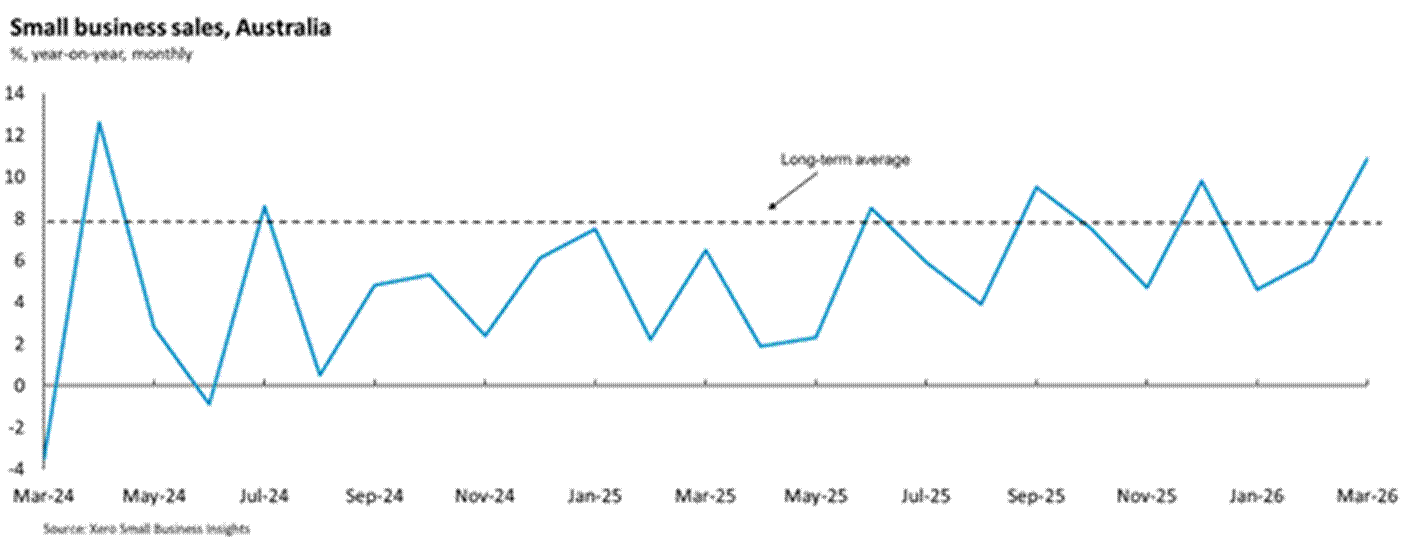
Australian small businesses continued their strong momentum from the end of 2025, with a 7.2% year-on-year increase in sales for the first quarter of 2026 – including a 10.9% y/y spike in March – confirming last quarter’s high was a sustained trend.

The XSBI report, which analyses anonymised and aggregated accounting data from 520,000 Australian small businesses, shows the sector maintained momentum despite back-to-back interest rate hikes and the early weeks of the fuel crisis caused by conflict in the Middle East. Australian small businesses outperformed their peers in the US, the UK, New Zealand, and Canada in Q1.

Australian small businesses March quarter at a glance:

  • Sales rose 7.2% y/y, increasing as the month progressed – rising 4.6% y/y in January, 6.0% y/y in February and surging 10.9% y/y in March
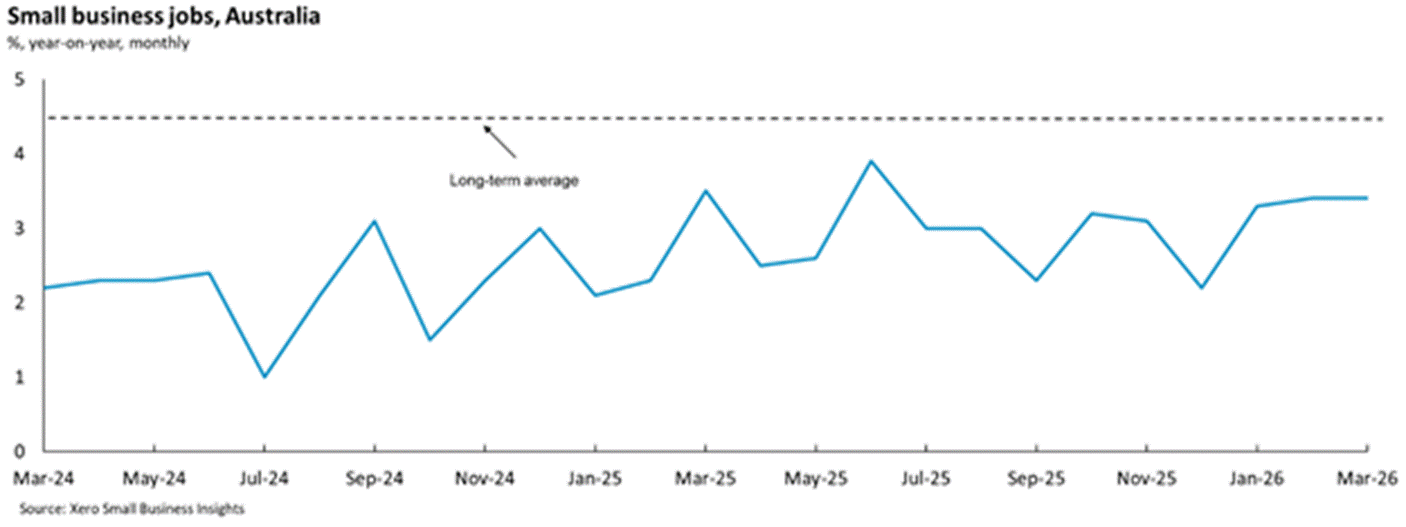
  • Jobs grew 3.4% y/y – increasing from 2.8% y/y in the December quarter
  • Wage growth also increased to 2.7% y/y – up from 2.5% in the previous quarter and just below the historical average of 2.9%
  • Small businesses were paid on average in 24.1 days, holding firm from 24.0 days in the December quarter
  • Construction (+10.4% y/y), healthcare (+9.2% y/y), and financial services (8.8% y/y) were the best-performing industries for sales growth
  • Queensland (+9.8% y/y) and Western Australia (+8.1% y/y) were the best-performing states in terms of sales, with Queensland continuing to have the highest growth rate in the country.

Louise Southall, Economist at Xero, cautioned that this momentum could be at risk if the RBA raises the cash rate in May or if escalating Middle East tensions further disrupt fuel, transport and global supply chains.

Southall pointed to the transport and logistics industry as a possible early warning sign. Higher fuel prices drove increased sales in the sector up 13.2% year-on-year in March. That was up 8.2 percentage points from February, and the largest month-to-month sales rise across all industries tracked by the report.

Southall said: “We can see that small businesses that provide passenger and freight services have already been impacted by higher fuel prices. We are now watching closely to see if and how this inflationary impact bleeds into small businesses providing other goods and services in the coming months and how higher prices could affect overall business activity.”

Price increases contained to fuel as small business sales grow

Ahead of the Australian Bureau of Statistics’ (ABS) household spending release, XSBI data offers an early proxy for consumer spending, showing that price increases to date are largely in fuel only and not broad-based. This suggests first-quarter sales likely reflected a genuine improvement in sales activity rather than being simply due to higher prices (with the exception of the transport and logistics sector in March).

Wages grow but industries still unable to match inflation

Wages rose 2.7% y/y in the three months to March, which is still behind headline inflation of 3.7%, but edging closer to the historical average of 2.9% and reflecting ongoing tight conditions in hiring. Hospitality workers had the largest pay increase in the past year (+3.5% y/y), although this had little impact attracting new workers to the sector, as it continues to experience a skills shortage. Construction also performed well, with wages up 3.3% y/y. Most other industries were around the national average, with the exception of transport and logistics (+2.1% y/y) and information, media and telecommunications (+2.2% y/y)

Australian companies ramp up hiring to start the year

As sales and wages gathered momentum, so too has jobs growth. Jobs grew 3.4% y/y in the March quarter, after a 2.8% increase in the December quarter. Public administration (+5.6% y/y) led the gains, with construction (+5.3% y/y) continuing to be a strong performer. Hospitality (+0.7% y/y) and administrative services (+1.3% y/y) remained the softest industries for jobs growth. As with sales, the best performing states were Western Australia (4.5% y/y) and Queensland (4.1% y/y), with WA continuing to attract talent following its country-leading economic and population growth in 2025.

Southall said: “Small businesses have started 2026 in good shape, with sales, jobs and wages all growing – key metrics the RBA monitors closely for interest rate decisions. Xero’s data is the first insight into how the conflict in the Middle East is impacting small businesses, and so far it hasn’t been as damaging as many feared, despite Australia being one of the countries most reliant on Middle Eastern oil among the markets we track. Importantly, this strength appears to reflect genuine increases in activity rather than price-driven growth, with cost pressures so far largely confined to fuel.”

Angad Soin, Managing Director ANZ & Global Chief Strategy Officer at Xero, said: “The strong XSBI results are good news for small businesses but challenges are still to come – we expect higher fuel costs to increasingly flow through to the price of goods and services across industries in the coming months. For small businesses, it’s an important time to think about your strategy to navigate the ongoing uncertainty. Work with your advisor, pressure test your cash flow, and make sure you have clear visibility of your costs in real time.”

To find out more about how Xero Small Business Insights is constructed, see the methodology.

Oracle Netsuite addsSuiteCloud Agent Skills

Oracle NetSuite, the #1 AI cloud ERP, has announced new NetSuite knowledge packages for AI coding agents that will help customers and partners accelerate and de-risk the creation of NetSuite applications and customisations. The new NetSuite SuiteCloud Agent Skills will make it easier for developers to create customised vertical and industry-specific applications by giving AI coding assistants a better understanding of the conventions, patterns, and best practices in SuiteCloud – NetSuite’s standards-based AI extensibility and customisation platform.

“Data is only powerful when it can be acted on quickly and safely,” said Brian Chess, senior vice president of AI, Product, and Technology, Oracle NetSuite. “With SuiteCloud Agent Skills, our customers and partners can transform how they extend NetSuite and move from lengthy, error-prone coding cycles to AI-assisted development that is fast, secure, and consistent.”

As the first ERP platform to leverage the agentskills.io open standard, SuiteCloud Agent Skills enable customers and partners to accelerate and simplify NetSuite customisations and extensions by introducing SuiteCloud development guidance across more than 25 AI coding platforms. With SuiteCloud Agent Skills, developers can build, review, and deploy SuiteCloud changes in natural language using popular AI coding agents, AI-enabled tools, and SuiteCloud Developer Assistant. The new SuiteCloud Agent Skills include:

  • User Interface Framework References Skill: Helps developers deliver NetSuite-compliant user experiences and avoid costly rework by supplying exact specifications for 60-plus interface components and insights from real-world issues to help avoid common pitfalls.
  • Permissions References Skill: Helps developers deploy secure, error-free configurations by providing a validated catalogue of 684 precise permission codes that help ensure users only have the access they need, in line with least-privilege security practices.
  • SuiteScript References Skill: Helps developers save time and increase SuiteScript code quality by providing the correct field IDs, names, types, and required status without manual lookups.
  • Documentation Practices Skill: Helps developers produce consistent, professional project docs by auto-generating README, ARCHITECTURE, and API files from code analysis.
  • Open Worldwide Application Security Project (OWASP) Security Reference Skill: Helps developers embed robust security from the start by delivering NetSuite-specific OWASP security guidance as code is written.
  • SuiteScript Conversion Skill: Helps developers improve efficiency and migrate from legacy v1.0 scripts to v2.1 in hours instead of days by mapping every API, restructuring entry points, and generating a validation report.

SuiteCloud Agent Skills Availability

User Interface Framework References and Permissions References skills are available now to customers globally. The additional skills will be available in Github soon.

Australia’s largest AI skilling commitment

Microsoft has announced the largest AI skilling commitment in Australia’s history: a pledge to help three million Australians build workforce-ready AI skills by the end of 2028. Delivered with partners across government, industry, education and the community sector, the commitment will expand access to practical, responsible AI training. This will help build an AI-ready workforce and support the goals of Australia’s National AI Plan to lift national capability and ensure AI is adopted safely and responsibly. 

The expanded commitment triples Microsoft’s 2024 pledge to skill one million people with digital skills across Australia and New Zealand, and the 2023 commitment to train 300,000 Australians – both achieved ahead of schedule – showing strong demand for practical learning. The new commitment deepens our support for Australians across three areas: the future workforce, the current workforce and the community, and addresses the skilling need in different ways – through our customers and partners to skill at scale, and through community and education to provide specialist skills. 

This new commitment is part of a series of investments into Australia’s AI future made today by Microsoft, including the company’s largest-ever global technology investment in Australia. By the end of 2029, the company will invest A$25 billion (USD 18 billion) in new digital infrastructure, national cyber defence capability, and workforce skilling programs. 

“Australia doesn’t just need more people who can use AI tools, we need a much broader set of capabilities: how to apply AI to real work, how to use it safely and how to judge when not to use it. Our goal is to make AI skills as common as writing a document – so this technology drives shared prosperity, creating opportunity that reaches students, workers, and communities right across the country,” said Jane Livesey, President, Microsoft Australia and New Zealand.  

The need is increasingly urgent. The 2025 Microsoft Work Trend Index found 53% of leaders say productivity must increase, while 80% of workers feel they lack the time or energy to do their jobs. At the same time, recent global LinkedIn research shows that AI has created a net increase of 1.3 million new AI-related roles since 2023 – with eight in ten C‑suite leaders now prioritising candidates with AI confidence over experience alone. This highlights the growing need to equip Australians with the skills required to work effectively alongside AI. 

“Helping to skill three million Australians in AI is ambitious, but it matches the scale of change underway. From classrooms to the frontline and the community, we’re committed to helping Australians build the confidence to use AI responsibly and turn new capability into new opportunity,” Livesey added. 

Future workforce: bringing AI into classrooms and clearer pathways into careers 

To prepare the next generation for an AI-powered economy, Microsoft Elevate for Educators is launching today in Australia to help schools and education institutions empower educators and transform learning. Offered at no cost, the program supports educators and school leaders to help schools move from early experimentation to consistent, safe AI adoption by combining trusted credentials, professional learning communities and system-level guidance. 

Through Elevate for Educators, teachers and school leaders can access the AI Literacy for Educators credential – a globally recognised standard for understanding, applying and leading responsible AI in schools – alongside community connection, practical training, implementation guidance and classroom‑ready resources. Together, these help education systems move from experimentation to everyday use, building the practical AI capability needed to improve teaching and learning outcomes over time. For students, this means earlier access to the skills needed to understand and apply AI in real‑world contexts, helping them graduate with the confidence to use these tools responsibly and participate more effectively in an AI‑enabled workforce. 

Recognising a growing gap for young people across all parts of the workforce, we’re partnering with Anyway (formerly Year13) to launch their latest tool for school leavers – an AI-powered Career Coach that delivers personalised career guidance, built on Microsoft Azure. The tool enables schools and governments to scale personalised student guidance, reduce counsellor workloads, and deliver measurable improvements in youth outcomes and workforce readiness.  

The Career Coach tool helps address a real capacity challenge for schools. With limited guidance counsellor availability across many Australian schools, too many students miss out on timely, personalised career advice, often at the exact moment they’re making high-stakes decisions about subjects, training and first jobs. To fast-track this support, Anyway and Microsoft will offer up to 1,000 schools across Australia free subscriptions to the tool, delivering personalised advice to students more quickly. Educators can register expressions of interest to be included in this program here

Beyond classroom learning, Microsoft is also helping create clearer pathways into the high-growth technical roles that will underpin Australia’s AI economy. Microsoft’s Datacentre Academy – launched last year in Sydney with TAFE NSW and expanded in March to Melbourne in partnership with Victoria University – provides practical, job-ready training and accessible entry points into datacentre and cloud careers. By connecting learners to in-demand skills and industry-recognised experience, the Academy helps more Australians move from learning to employment, supporting local jobs and the digital infrastructure needed to scale AI responsibly. 

Current workforce: building frontier-ready skills for every role 

AI adoption can’t be limited to specialists. As more organisations rapidly adopt AI, we’re seeing the rise of the “frontier worker” – people in every function who combine domain expertise with AI literacy, sound judgment, and the ability to work effectively with AI tools and agents. 

One of Microsoft’s flagship workforce skilling partnerships, the Institute of Applied Technology Digital (IATD), is helping Australians build job‑ready skills at scale, with enrolments reaching 500,000. Through free microskills and heavily subsidised microcredentials, the program provides fast, practical access to critical capabilities in AI, data and cyber–skills that are increasingly essential across every role. Co‑created and co‑delivered with TAFE NSW, Macquarie University and the University of Technology Sydney, the model’s strength has led to IATD being recognised as a TAFE Centre of Excellence, jointly funded by the Australian and NSW governments to skill an additional 50,000 people each year.  

Across the workforce, partnerships with major employers – including Telstra, Wesfarmers, and Westpac – will continue to deliver AI training at scale, with 150,000 workforce learners trained in the past year. Through bespoke programs that support both technical and non‑technical workers, these tailored initiatives provide free training pathways that help employees apply AI safely and effectively in their day‑to‑day roles.  

Microsoft is working with partners, including training provider Akkodis Academy, to deliver AI learning modules designed specifically for field and deskless workers. The training is built around how field- and trade-focused employees would use AI in practice, often on-site or in the field, and accounts for job-specific language, acquired shorthand, and a greater reliance on voice-based tools rather than typing. Through the AI Academy, over 14,500 enterprise learners in Australia have been trained, along with a further 10,000 educators and students, helping build practical AI capability across both frontline and knowledge‑based roles. 

Microsoft’s ongoing work with the Australian Council of Trade Unions will ensure the worker voice and skilling remain at the heart of Australia’s AI transformation, including through co-developing curriculum with the Australian Trade Unions Institute to equip union workers with the knowledge they need to support their members as they navigate AI transformation in the workplace.   

Through tools like AI Skills Navigator, we’re making it easier for workers and employers to find the right learning pathway, including trainings available through LinkedIn Learning, whether someone is starting with the basics or building advanced, role-specific capability. By bringing together curated training from Microsoft and LinkedIn Learning into a single, accessible experience, the platform helps individuals build practical AI and human skills through flexible, online learning that can be completed at their own pace. Free trainings such as Investing in Human Skills in the Age of AI – inspired by the book Open to Work by LinkedIn CEO Ryan Roslansky and LinkedIn Chief Economic Opportunity Officer Aneesh Raman – and this selection of free courses to earn professional certificates on AI, cybersecurity and more, look to explore the growing importance of critical thinking, empathy, communication and creativity as AI reshapes the way we live and work. 

Community: expanding access to AI opportunity with trusted partners 

For AI skilling to create national impact, it must be inclusive, reaching people and communities who have historically been underrepresented in technology. Microsoft’s AI Diffusion Report shows Australia ranks 11th globally, with 37% of the working-age population using generative AI tools at the end of 2025. Yet the report also finds adoption is accelerating unevenly and the digital divide is widening – reinforcing the importance of ensuring AI capability and opportunity are shared broadly. 

To strengthen community and nonprofit leadership with responsible AI, Microsoft Elevate for Changemakers is launching today to support Australian nonprofit and social impact leaders who are driving practical AI adoption in service of their communities. Designed to meet organisations where they are, the free program builds hands-on skills with free AI readiness credentials, alongside access to a fellowship of global champions for deeper applied learning, while also helping teams strengthen internal capability so AI can be used safely, effectively and in line with community expectations. 

The launch of Elevate for Changemakers builds on existing work with not-for-profits, including working with Indigenous-led organisations such as Deadly Coders. Through Minecraft for Education, we’re supporting culturally relevant pathways for First Nations students to build skills in AI, coding and cloud, helping grow Indigenous representation in Australia’s future technology workforce.  

To date, Deadly Coders has reached 5,328 students and 147 teachers across communities in Queensland, New South Wales, Victoria, South Australia, Western Australia and the Northern Territory – building digital capability and opening pathways into future technology careers. The program scales access to culturally grounded AI learning and supports more young people to build the foundational skills needed to participate in an AI-enabled economy. 

One in three Australian small business owners plan to retire

New research commissioned by VistaPrint has found that tens of thousands of businesses risk closing not because they are failing, but because no one is ready to take over1, at a time when small business insolvencies are already at record levels2. Nearly one in three (31%) Australian small business owners plan to retire within the next five years, but just 16% have a documented succession plan. 

Close to half (45%) of all Australian small business owners considering an exit have no succession or sale plan at all. One in four (25%) have never even considered what will happen to their business when they leave.

“With one in three small businesses getting close to retirement without a clear plan for what happens next, we are heading towards a succession cliff. In many cases, the business is still heavily tied to the owner, through their relationships, reputation and day-to-day involvement, which can make it much harder to sell, hand over or keep the business going when they step away,” said Marcus Marchant, CEO of VistaPrint ANZS.

Exits Are Often Unplanned

Four in ten owners (40%) of all Australian small business owners have already experienced a sudden departure from a previous business – through health crises, financial pressure, burnout or market shifts. Yet one in five (19%) of those planning to retire have not discussed their exit with anyone – not family, not staff, not an adviser.

Built on Reputation, but at Risk of Disappearing

For decades, many of Australia’s small businesses have run on the back of the founder’s name and relationships. That works while they’re still behind the counter or laying the bricks. But when a business changes hands, those personal connections don’t always follow. Without visible branding and a digital presence, they’re starting from scratch.

Among small business owners aged 50 and over, reliance on reputation rather than formal branding rises to 78%. Nearly one in five (18%) of those nearing retirement have no professional logo, no website, no social media presence and no marketing program.

“If a buyer or successor can’t find you, can’t see what you stand for and can’t evaluate what they’d be taking on, then they’ll move on,” Mr Marchant said. “Branding isn’t vanity for these businesses. It’s the difference between a business that can be handed over and one that closes when the founder walks away.”

Making It Work 

Mark Griffiths, who, along with his brother Lee, took over Melbourne-based Griff & Lee Construction from their father in 2025, says investing in the way the business presented itself made the handover successful.

“We’d worked alongside Dad for years, so we knew the trade inside out. But when we stepped out on our own, we realised his reputation didn’t automatically transfer to us. We had to build our own identity from scratch: signage on the trucks, uniforms with a professional logo, and a website, so people could see we were a legitimate operation.”

“It’s made a real difference. We’re getting enquiries from people who found us online or saw our van on site. Dad mostly built his business on word of mouth and a phone number on the fridge, and that still works. But if you want to grow beyond the people who already know you, you need a new way for them to find you,” Mr Griffiths said.

Branding as a Business Asset

More than eight in ten owners (84%) believe branding would lift their business’s value or sales appeal.

More than six in ten (63%) of all Australian small business owners want their business to continue beyond them. Among those actively considering an exit, 72% say they’d invest in branding if it improved their sale outcome. The barrier isn’t willingness; it’s cost concerns and not knowing where to start.

For businesses preparing for succession, it’s important to actively get your brand out into the world. Ensure your logo appears wherever potential customers are likely to see it – from signage and uniforms to business cards, flyers and online channels.

A clear and consistent brand presence across these touch points helps make your business visible not only to customers, but also potential buyers. By applying your brand consistently, you shift the business from being built on “personal reputation” to becoming a transferable brand asset.

“The owners who act now, documenting how the business runs, strengthening how it presents itself, will have more choices and better outcomes than those who leave it until it’s too late,” Mr Marchant said.

Payments feature eases EV transition for small businesses

WEX®, a global leader in intelligent payment solutions, today launches a new way for Australian fleets to manage fuel and EV charging through the WEX Motorpass® payments dashboard with the integration of the Chargefox EV charging platform. The move offers access to thousands of EV charging plugs and a unique digital payments infrastructure. 

Delivered in partnership with Australian Motoring Services, operators of Chargefox, the feature makes Motorpass the only multi-brand fuel card in Australia to offer digital EV charging payments. It aims to help businesses with current and transitioning mixed-fleets, with access to Australia’s largest EV charging network.

As tough emissions reduction targets drive electric vehicle adoption across Australian businesses, over one-third of fleet managers expect EVs to be their primary vehicle type by 2030, requiring rapid infrastructure development and innovation to support the fast-paced transition. Matt Arthur, Vice President and General Manager of WEX Australia, reinforced the critical role of vehicle fleets as a key contributor in the national energy transition. 

“Electric vehicles are key to the energy transition in Australia. Providing simplified access to charging infrastructure nationwide is essential to supporting businesses through the transition with confidence,” he said.

“The introduction of digital payments infrastructure that combines EV charging capabilities with multi-brand fuel access, while supporting driver confidence through a single app, is a crucial next step to ease the burden on businesses as they navigate the energy transition.”

Delivering on driver confidence

Range anxiety remains a key barrier in Australia’s transition to electric business vehicles. As of late 2025, range anxiety was listed as the main point of hesitation in as many as 60% of EV purchase decisions. For businesses requiring vehicles to complete long-haul journeys, charger access becomes a key friction point in EV transition. 

With the launch of the WEX Motorpass EV payments capability, the app’s advanced route planning feature equips drivers with the ability to easily locate and access public EV chargers along their route, reducing travel inefficiencies and subsequent costs to the business.

The Motorpass Driver app offers widespread access to over 3,000 public charging ports nationally. The native integration with Chargefox enables drivers to identify and access available chargers along their route, reducing pressure on depot charging schedules and grid restraints. 

Streamlining mixed-fleet admin

The WEX-Chargefox integration , allows fleet managers to track, manage, and report on EV charging and fuel transactions through WEX’s online platform, helping to remove a significant administrative burden for mixed-fleet managers.

“As fleets transition to EVs, reducing complexity makes a real difference,” said Islam Hassan, Chief Customer Officer, at Australian Motoring Services, operators of Chargefox. “By integrating charging into the WEX Motorpass app, we’re giving mixed fleets one familiar platform across all vehicles. It streamlines reporting and compliance for managers, and keeps things simple for drivers, with no extra apps, and no new processes.”

Single-system digital payments further simplifies data analytics for mixed fleets. Fleet managers, finance teams and business decision-makers can access, collate, and review data across all vehicles, including other costs such as maintenance, tolls, and car washes. This increased control helps give a more accurate picture of vehicle usage and cost of ownership, consolidated insights generated with near-real time visibility.

WEX’s EV functionality can be added to customers’ existing Motorpass fuel cards within one business day, with no need to reissue new cards, supporting almost immediate mixed-fleet integration. Motorpass customers can access the feature from Tuesday, 21 April. 

For more information, please visit the WEX Motorpass website.

SMEs using AI are growing 2.8x faster

Australian small and medium-sized enterprises (SMEs) using artificial intelligence (AI) products and features are growing 2.8 times faster than those that aren’t, according to new analysis from MYOB.

Based on aggregated and anonymised data from hundreds of thousands of SMEs, the modelling shows a clear edge in performance for the 40% of small-to-medium sized businesses currently adopting AI[1].

Additional findings taken from the latest MYOB Bi-Annual Business Monitor, which surveyed more than 1,000 SMEs across the country, reveal where the benefits are being felt. Among those using AI, 54% report saving time and 34% say it is improving productivity, with the technology already driving gains across core business functions.

Despite the clear advantages on offer from AI adoption, MYOB’s April Business Monitor reveals almost half of (46%) of SMEs say they are not using AI and nor do they intend to over the coming 12 months.

CEO of MYOB, Paul Robson, said the results point to a widening AI divide.

“AI is the most powerful productivity lever the SME economy has experienced in years, already delivering measurable gains in efficiency, growth and revenue,” Paul said.

“Those adopting early are pulling ahead, and even modest uptake could unlock billions in additional revenue for the economy.

“As a core part of Australia’s technology sector for 35 years, MYOB sees AI transforming every employee’s impact, shifting from a ‘nice to have’ to a business-critical investment, though many SMEs still face barriers around trust, skills and understanding its value.”

Where AI is being used, it is increasingly being embedded into day-to-day operations, reflecting the broader trend of SMEs integrating AI into their business management solutions rather than treating it as a separate add-on.

Supporting this shift toward embedded, practical AI, MYOB has rolled out a suite of impact-led AI agents and AI-powered features across its business management platform, including Australia’s first AI BAS support agent, AI Business Insights, Smart Reconciliation and Smart Invoice Reminders. These have been designed to take the effort out of SME compliance and cashflow, and help business owners and their advisors save time, improve visibility and stay on top of their operations.

MYOB has also recently announced a five-year strategic partnership with Microsoft to jointly fund, build and scale AI innovation across MYOB’s business management solutions, accelerating embedded AI into day-to-day workflows and intelligent agents that forecast cash flow, guide compliance readiness, surface proactive insights and deliver next-best actions within the products customers already use.

For SMEs, while technology investment is accelerating, workforce readiness is not keeping pace. With two-thirds of SME employers not actively looking for AI experience when hiring and 72% claiming they have no plans to offer AI training, Paul added practical support is required, giving business owners the tools, guidance and confidence to adopt AI responsibly.

“With the right collaboration between industry, experts and government, we can help more SMEs turn that growth potential into real impact,” Paul said.

MYOB says building AI readiness into productivity programs will be critical and has welcomed the Federal Government’s $17 million AI Adopt Program as a step towards lifting capability across the sector. The AI Adopt Program is part of a suite of measures outlined in the Albanese Government’s National AI Plan released in December last year.

Behind on AI? Practical Ways Small Businesses Can Start Today

Artificial intelligence is rapidly reshaping the way Australian businesses operate, enabling faster workflows, smarter decisions and new opportunities. Yet this transformation is not being felt evenly across the economy. The Australian Government’s AI Adoption Tracker shows us that while Australian small businesses are increasingly using artificial intelligence, those with fewer than 20 employees continue to lag well behind larger organisations in their adoption.

AI can be a powerful tool for small businesses looking to grow and improve how they operate but taking that initial plunge can be daunting. With a crowded market of AI tools, it’s not always clear which ones will deliver real value for your team, how to balance cost when many solutions charge a premium per user, or how to support employees in changing long-established ways of working so AI is actually used day to day.

Many small businesses are already putting AI to work in practical ways. For those early in their AI journey, the most immediate question is often how AI tools can support employees in their day-to-day roles.

Some of the most common and accessible use cases for small businesses include:

Recapping Meetings: AI can automatically capture key discussion points and action items, making it easier for teams to review conversations or stay informed when they can’t attend a meeting.

Summarising Information: When employees are faced with lengthy reports, datasets, or message threads, AI can distil the most important insights into clear, concise summaries to help save time and reduce information overload.

Compiling messages: From sales outreach to customer support responses, AI can help teams draft emails and messages faster, improving both speed and consistency.

Writing first drafts: AI assistants can help create initial drafts of business plans, marketing content, blog posts, or project documents, giving teams a strong starting point when time or resources are limited.

When the right solution is deployed across your business, scattered meeting conversations and AI interactions can be transformed into continuous intelligence. By connecting AI tools so they are integrated into the workflows where your work already happens, you can access contextually relevant suggestions and insights. At Zoom, we call this “conversation to completion”. This means turning discussions into documented decisions and actionable outcomes.

When rolling out AI to your employees, a thoughtful approach can make the difference between a tool that’s genuinely adopted and one that’s quickly ignored. The goal is to embed AI in existing everyday workflows.

Focus on impact

Rather than adopting AI simply because it’s available, start with the problems you’re trying to solve. What are the existing processes that frustrate your employees the most? Identify friction points in day-to-day work and explore how AI can help remove them.

For example, if employee feedback shows frustration with too many meetings and poor follow-through, AI-generated summaries can keep non-essential attendees informed without adding unnecessary meetings. These summaries can also be turned into post-meeting documents that capture decisions, outline next steps, and clearly assign actions to help teams move faster from discussion to execution.

Prioritise AI tools that work with your existing tech

Tool fatigue is a real challenge for businesses. In fact, the Global Collaboration in the Workplace survey, commissioned by Zoom and conducted by Morning Consult, shows that as the number of workplace apps increases, collaboration becomes significantly more challenging – an issue that can be amplified in smaller teams with limited resources. Before adding anything new, consider how well it connects with the systems you already have in place.

Support employees through training and education

After identifying where AI can add value in your business, the focus should shift to helping your team feel confident using it. Think about how AI-enabled workflows can be built into existing processes or clearly explained, so teams understand when and how to apply them to everyday challenges. Again, using AI first to help “fix” things employees have complained about is a great way to get buy-in from your team.

Employees who don’t use AI at work will often say it’s because they’re not familiar with it, or because they don’t know how it could help them. Addressing this gap early is critical. By investing in thoughtful onboarding and practical training, businesses can help ensure AI becomes a natural, useful part of the workday rather than an underused feature.

For small businesses, successful AI adoption doesn’t start with big projects or transformations, but rather with small, meaningful improvements to everyday work. By focusing on real employee pain points, choosing tools that fit within existing workflows, and investing in simple training, AI can quickly move from an abstract concept to a practical advantage. The businesses that take this approach will be in the best position to build confidence, momentum, and long-term value from AI.

Contributed by Sergio Aguilera, Head of Solutions Engineering APAC, Zoom

How Australian startups can address the sustainability mandate

As sustainability rapidly shifts from voluntary to mandatory, scrutiny is also broadening out from large corporations to startups and small businesses. As global awareness of environmental, social and governance (ESG), requirements increases, stakeholders now expect sustainability to be an active practice within organisations of all sizes.

For startups, sustainability now directly influences a business’ reputation, operational efficiency and overall competitive positioning. Startups that integrate sustainability into their operational model early on demonstrate ESG, which can give them a competitive advantage over others that don’t.

Regulation is tightening

Pressure from Australian regulators and consumers now places a greater weight on environmental responsibility, influencing how businesses are evaluated and trusted. Major organisations pass down their net-zero commitments through supply chains, requiring smaller businesses to also adopt low-carbon practices and provide transparent sustainability data to the public.

Australia’s climate-related disclosure laws are expanding, changing how environmental performance is evaluated and includes emissions measurement. As a result, organisations are going to be increasingly expected to quantify emissions and disclose their performance publicly.

Transparent sustainability data

The inability to provide transparent sustainability data puts startups at risk from being excluded from commercial opportunities.

The need for transparency is also heightened by the growing conversation around the environmental impact of digital infrastructure, especially with the boom of AI. Digital ecosystems account for a big portion of global emissions due to the energy use of data centres. 

Startups adopting AI tools and expanding their cloud usage will need transparency on the technologies they use, how they work, and the environmental cost behind them. This makes partnership with responsible cloud providers very important.

Technology that supports environmental responsibility

Choosing technology that actively supports sustainability is becoming a critical lever for startups looking to reduce their carbon impact and meet rising expectations from customers, investors and regulators.

Infrastructure decisions made early can meaningfully influence a company’s environmental footprint as it scales.

Some modern data centre designs already demonstrate what lower‑impact cloud infrastructure can look like in practice. In Sydney, for example, some newer facilities can draw more than 90% of their power from renewable sources and use highly efficient cooling systems that consume a fraction of the water typically required across the industry. These engineering choices materially reduce the emissions associated with data storage and compute‑heavy workloads, including AI.

As businesses continue to digitise, energy consumption from cloud services, AI models and data storage becomes a measurable component of overall environmental impact. Yet many startups lack straightforward ways to quantify this footprint or track progress over time without introducing significant complexity.

Increasingly, infrastructure providers are addressing this gap by offering transparent carbon measurement tools grounded in recognised methodologies such as Environmental Impact Tracker. By accounting for emissions across the full lifecycle of a server, from manufacturing through to operation in data centres, and aligning calculations with established greenhouse gas protocols, these tools make it easier for growing companies to understand, report and improve their environmental performance.

Practical steps to take today

By gathering these insights, startups can get a clear understanding of the true environmental cost of their digital operations. Once businesses can see where their emissions are generated, they are better equipped to make informed decisions about how to improve infrastructure decisions. This visibility reinforces that carbon transparency is not just a reporting requirement, but a strategic advantage.

Embedding sustainability into core operations enables startups to integrate long term planning in their business model. Cloud services with built-in measurement capabilities help startups automate emissions data collection and reporting while improving accuracy. Decisions about where data is processed, how infrastructure is powered, and which AI models operate efficiently are key to building a trustworthy, credible and scalable business.

Contriubuted by Satyam Santosh, Startups Program Lead APAC, OVHcloud

How to identify and structure the right partnerships

In today’s economic environment, small businesses are under more pressure than ever to grow efficiently. Customer acquisition costs are rising, competition is intensifying, and many operators are being forced to rethink traditional growth strategies. One of the most effective and often underutilised ways to scale sustainably is through partnerships.

At Night n Day Group, partnerships have played a critical role in our evolution from a small family business into a national healthcare product provider supporting Australians across the healthcare and disability sectors. Our business itself began with a simple, personal innovation. My mother, a fashion designer, created a safer alternative to traditional nappies in the 1980s, which ultimately laid the foundation for what Night n Day Group is today. Most recently, our partnership with health technology platform Kismet has reinforced a simple but powerful idea: the right partnerships don’t just drive growth, they create better outcomes for customers.

So how can small businesses identify and structure the right partnerships?

Start with shared purpose, not just opportunity

The strongest partnerships are built on aligned values and a shared mission, not just commercial gain.

In our case, both Night n Day Group and Kismet were founded from deeply personal experiences supporting family members through care challenges. That shared understanding of the customer journey created an immediate alignment in how we approach service, trust and long-term impact.

For small businesses, this means looking beyond surface-level opportunities. Ask:

  • Do we serve the same customer in complementary ways?
  • Are we solving adjacent problems?
  • Do we share a similar philosophy on customer experience?

If the answer is yes, you’re starting from a strong foundation.

Look for complementary strengths

The best partnerships combine different but complementary capabilities.

Night n Day Group brings specialised healthcare products and decades of industry experience. Kismet brings a national network and a digital ecosystem that connects providers, carers and participants. Together, that combination allows both businesses to deliver more value than either could alone.

For SMEs, this could look like:

  • A product business partnering with a distribution platform
  • A service provider aligning with a technology partner
  • A local operator collaborating with a business that has national reach

The key is to avoid duplication and instead focus on how each partner fills a gap for the other.

Prioritise access to networks, not just revenue

One of the biggest advantages of partnerships is access; access to new audiences, trusted relationships and established communities.

Through our partnership with Kismet, we are connecting directly with thousands of professionals across the NDIS ecosystem, including support coordinators, plan managers and allied health professionals.

For many small businesses, this kind of access would take years and significant marketing investment to build independently.

When evaluating a partnership, consider:

  • Does this give us access to a new and high-value audience?
  • Is that audience already engaged and trusted?
  • Can we show up in a way that adds real value, not just sells?

Structure partnerships around real engagement

Partnerships only truly deliver value if they are activated properly. Too often, businesses announce partnerships but fail to embed them into day-to-day operations. The real impact comes from consistent, meaningful engagement.

As part of our collaboration with Kismet, Night n Day Group will participate in more than 25 industry networking events nationally, alongside ongoing digital and community engagement. This ensures the partnership is not just strategic on paper, but practical in execution.

For SMEs, this could include:

  • Joint events or activations
  • Co-created content or education
  • Shared customer touchpoints
  • Cross-promotion through existing channels

The goal is to create multiple moments of connection.

Build relationships, not just transactions

Even in a digital-first world, business is still built on trust.

Particularly in sectors like healthcare, disability and professional services, relationships remain central to how decisions are made. Face-to-face engagement, community presence and consistent interaction all play a role in building credibility.

Small businesses should view partnerships as long-term relationship investments, not short-term sales opportunities.

Align on long-term outcomes

The most successful partnerships are those where both parties are working toward a shared outcome.

For us, that outcome is simple: making care easier and more accessible for the people who need it. By combining networks, products and expertise, we create a more connected experience for families, carers and professionals.

For other businesses, the outcome might be growth, innovation, or customer experience but it must be clearly defined and mutually beneficial. Partnerships are no longer a “nice to have” for small businesses, they are becoming a core growth strategy.

In an increasingly connected and complex business environment, those who succeed will be the ones who collaborate effectively, leverage each other’s strengths and focus on building genuine, long-term relationships. Because at the end of the day, the right partnership doesn’t just expand your business, it strengthens the entire ecosystem you operate in.

About Night n Day

Night n Day Group is a family–owned Australian business with more than 35 years of experience supporting individuals, carers and healthcare professionals across the continence and healthcare sectors.

Night n Day Group: Two Brands, One Trusted Family Business

Night n Day – Australia’s leading brand in washable continence products, offering a full range of underwear, swimwear and bedding for all ages including custom–made solutions designed for comfort, dignity and independence.

IncontinenceProducts.com.au – a national online healthcare platform providing a one–stop shop for continence products, nutrition, catheters, wound care, skincare and much more. As a registered NDIS provider, IncontinenceProducts.com.au committed to making access to essential healthcare products simple, reliable and stress–free.

Contributed by Michael Lakiss-Smith, Managing Director at Night n Day

Mobile-First Venues for hospitality

As Australian hospitality venues grapple with rising wages, ongoing staff shortages, escalating fuel and transportation costs and increasingly tight margins, technology that drives operational efficiency has become a key point of differentiation across the hospitality sector. At the same time, for many operators, technology itself is also becoming a significant cost centre.

While some venues continue to rely on point-of-sale systems designed more than a decade ago or adapt generic tablet-based software never built for the pace of modern service, many are now shifting towards mobile-first solutions. However, with an increasingly crowded market, identifying the right platform and how to maximise its benefits has become more complex.

Rapidly expanding its footprint in Australia, Tabit is a leading global hospitality platform for enhancing restaurant profitability and operational efficiency through mobile-first, handheld technology.

Drawing on insights from venue operators it works with across Australia and globally, Tabit CEO and co-founder, Barry Shaked, says there are five non-negotiables to consider when choosing a hospitality technology platform, and shares top tips for Australian operators to ensure they are maximising the benefits of a mobile-first system.

Five tips for choosing a mobile-first technology platform and how to maximise its benefits, according to Tabit CEO and co-founder, Barry Shaked:

1. Does the technology genuinely reduce labour pressure?

Restaurants move quickly. If the technology slows staff down, it becomes a cost rather than a tool. The goal should be giving teams the ability to focus on guests, not screens.

Ensure all staff is proficient with the technology to ensure the platform performs optimally.

Staff should be familiar with how to take orders tableside and process payments instantly so they can manage more tables without needing to return to a central terminal.

The platform should reduce unnecessary movement and free up time for guest interaction.

2. Does the technology include built-in tools to increase spend per table?

Good hospitality technology today should include guided ordering prompts, menu recommendations and guest history tools that help staff suggest additional items naturally during service.

3. What does the technology reveal for fewer errors and faster service?

It’s key to ensure you’re considering the data provided on the backend of a system so you can identify where improvements can be made on the ground; a good technology platform should reveal this clearly.

Also ensure all members of your team are on-board with the sending of orders directly to the kitchen through the mobile-first platform, and not through other systems like traditional hand-written methods, to maximise efficiency and minimise the errors in service and payment.

Joel Hales, Executive Chef at Melbourne’s popular new sandwich bar, Sangaweech, says: “As a new start-up, the data provided on the backend with Tabit is crucial to our success because it allows us to clearly see what’s performing well and where improvements are needed.”

4. Does the technology support stronger guest relationships?

While hospitality is fundamentally people-first, legacy systems often force staff to spend more time navigating screens than engaging with guests.

The best platforms are designed to enhance, not replace, human interaction by providing visibility of guest preferences, dietary requirements and visit history to enable more personalised service.

Annie Karam, owner of Speedos Cafe in Bondi, says the difference is immediately noticeable.

“Being able to see guest preferences and previous orders helps our team make better recommendations. It takes the guesswork out and makes the experience more personal,” says Annie Karam.

A modern mobile-first system should allow for a positive cultural shift rather than just a technical shift. It should allow staff to spend more time on the floor with guests, and less time behind terminals.

5. Does the technology connect the entire venue in one system?

Many hospitality venues still rely on disconnected systems spanning POS, payments, kitchen displays, reporting and third-party delivery platforms, creating inefficiencies and fragmented data.

The best modern platforms increasingly unify these functions into a single connected ecosystem, giving operators real-time visibility across the entire venue. This level of integration allows for clearer insight into menu performance, service flow and overall trading conditions, enabling faster and more informed decision-making.

For more information and advice on maximising mobile-first technology solutions in hospitality, visit: https://www.tabit.cloud/