About Angus Jones

Angus started his first small business in 1989 and has since gone on to have a successful career in marketing. He realised although there were many websites for small business none was addressing the question of how to. Angus has a passion to articulate benefits that add value to customers/readers.

Storage and sharing of files

Emailing copies of files around an office environment just does not make sense especially if they are large ones. In this guide we will discuss what are your options for storage, backup and sharing files in small businesses and lead you through what you should consider in making your decision.

File sharing is the practice of distributing or providing access to computer files, multimedia (audio, images, and video), documents, or electronic books. Common methods of storage, transmission, and dispersion include manual sharing utilising removable media such as a USB stick or portable hard drive, file sharing server on a computer network, and cloud-based storage platforms on the internet.

WHY do I want a File Share Storage Solution?

You may wish to share files in your office, to your clients, or on the other side of the world. It is most likely to be a document being worked on by many or a large document that is too large for email. Parties with access may or may not have the authority to edit the file.

Even if you do not want to share files, having separate storage available is great for an individual to store files when they start to run out of room on their PC.

WHAT do you need to know about File Sharing and Storage Options?

There are 3 main types of storage that a small business is likely to consider:
  1. USB memory stick or portable hard drive – portable storage that plugs into a USB port on your PC.
  2. File Sharing server – Data storage box located on your network (Be sure to read our essential guide on Networks)
  3. Cloud-based storage – Data storage provided by a 3rd party and accessed through the internet (Be sure to read our essential guide on Cloud-based services)

File sharing is bad when the wrong person gets hold of a file that they should not have and as such you should ensure you have the appropriate security measures to stop unauthorised access.

Advantages and Disadvantages:
  • USB memory stick
    • Advantage: Cheap and does not require internet or networking, very cheap
    • Disadvantage: manual and requires to be physicaly moved between devices, fixed capacity
  • File Sharing Server
    • Advantage: No monthly fees, instant access over network and or internet, high-speed transfer especially on the same network, functionality can be combined with other applications on an in house server
    • Disadvantage: upfront cost and set up, data could be lost if not backed up properly, additional capacity requires additional or larger hard drive to be installed
  • Cloud-Based Storage
    • Advantage: no hardware required, predictable monthly fee, increase capacity by paying more, access from anywhere
    • Disadvantage: Speed limited to internet speed, you rely on storage vendors security and backup unless unlimited, uses your internet download allowance, ongoing fees

HOW to make a decision between Cloud Storage vs NAS File Server?

Considerations when buying a file server:

A file server also called a NAS (network-attached storage) is a computer designed specifically to share files and can be provided by an IT specialist or even bought off the shelf at Officeworks.  It will plug into your office network by ethernet cable or potentially by wifi.

  • Is it plug and play – just works once you connect it?
  • Will it support a backup solution preferably offsite? (Be sure to read our essential guide on Backup)
  • Do you want it to connect to a cloud service for extra capacity or backup?
  • Does it have a USB port for simple backup?
  • What size and speed of hard drives?  Normally expressed as TB or terabytes.
  • Does it have spare drive bays to add additional hard drives?
  • Will it work with Windows and Macs?
  • Does it support redundancy?  This could be a 2nd power supply or duplication of the same data on 2 disks. This means if one fails you are still up and running without needing to go to your backup.
  • Can video surveillance footage be plugged directly in?
Considerations if choosing a Cloud-based Storage solution:
  • Key players in this space include Google Drive, Microsoft One Drive, iCloud, and Dropbox all of which offer a small amount of storage for free and then charge a monthly fee based on capacity required. What will be your cost?
  • What do you want to store here and is that something you want as a policy in your business?
  • How much storage do you need? (Allow min 1TB per person – more if you deal with large files)
  • Is there a file size limit? For example, individual file no bigger than 10GB
  • Cloud vendors may offer you value add services like productivity tools. What are they and are they of any use?
  • What guarantees do they provide around the availability of service? For example, they may say that your data will be available 364 days meaning up to 1 day a year it might not.
  • What security do they have in place?
  • How do you authenticate an individual is allowed access? (passwords etc)
  • Is there a backup strategy? How many previous versions of a file are backed up and can still be accessed?
  • How fast can you upload or download files? Is that speed equal to the speed of your internet plan?
  • Can files be automatically synced between a PC in the office and the cloud storage?
  • How does it integrate with your operating system (e.g. Windows) and browser (e.g. Google)?
  • Does your main business application integrate automatically?  For example, the CAD design software AutoCAD will integrate with OneDrive allowing seamless sharing of this drafting tool.
  • Where is the storage located?  Is it Australia or overseas?
  • What customer service and support is available?

HINT

Be sure to read our essential guide on Backup to ensure that if you have a disaster you can recover from it!

Reviews of simple storage devices can be found by visiting Gadgetguy

A good comparison of cloud storage vendors can be found here:
Techradar

SUMMARY – Easy File Share Solutions

A modern small business will need some sort of file sharing facility and with modern technology, it is easy to do.  This will make you more collaborative with your staff, for customers and your suppliers. It will also save you time, money, and stress.

Cybersecurity challenges in the new normal!

2020 will be remembered for many things. And while many global communities still face enormous challenges, an important legacy of the pandemic is the acceleration of what was considered futuristic technology into mainstream adoption.

Almost overnight, our homes were turned into offices, classrooms, gym studios and social spaces, pushing technology reliance to a new level. All the evolution fostered over the past 30 years was incorporated at a broad scale and almost overnight. From video conferencing and streaming to massive eCommerce adoption and, even further, incredible digital tools for business management, healthcare and schooling, it all became essential in the ‘new normal’.

As we all adapted to this new reality, companies of all sizes began to see remote work as a new opportunity for the future. A recent Gartner CFO survey revealed that over two-thirds (74%) plan to permanently support employees working from home after the Covid-19 crisis ends.

Unfortunately, the new world of remote workforces drove a surge in cyberattacks and the risks continued to grow way into 2021. Check Point Software Technologies, a leader in cybersecurity solutions globally reported a 24% increase in cyberattacks in Australia.

During the Jan-Feb period of 2021, Check Point Research revealed each Australian organisation faced an average of more than 1,500 cyberattacks monthly compared to the previous four months, no organisation was spared. Check Point Research data also reported Australian SMBs experience an average of 50 cyber incidents each month, with 63% having accessed a malicious website in the last 90 days.

Are you prepared to conduct your business safely over the internet in this new world? There are many ways to transform challenges into opportunities.

How did this happen?

Both employees and businesses also faced numerous challenges with this new work-from-home environment. Suddenly, devices were being shared between different family members, homes had low complexity passwords to their Wi-Fi networks, and business data was being spread everywhere.

SMBs had it harder, but the lack of cybersecurity best practices and policies cannot be ignored. In fact, most institutions still rely on cybersecurity technology that dates back to the 2010s – what we call Generation III security that’s based on intrusion prevention systems (ISP).

For those unfamiliar, the First Generation of cybersecurity tools dated to the late 1990s and mainly comprised anti-virus software. In the early 2000s, the increased use of the internet drove the creation of firewall platforms evolved (Gen II). Since then, technology developed faster: around 2015, it incorporated behavioural analysis (Gen IV). Over time, detection-only based solutions stopped being enough against fast-moving attacks, which led to the current multi-vector prevention approach (Gen V) we see today.

Many Australian businesses only have third generation security deployed but this outdated technology can be just as dangerous as not having security at all. This is largely because the architecture in previous generations (i.e Gen III and IV) can’t protect against 5th generation attacks on today’s IT devices and networks.

The Covid-19 pandemic and the working-from-H\home necessitated that companies need to reconsider their cybersecurity approach. So how can businesses bridge this security gap?

Adopting a new mindset: Prevention vs (attempted) Remediation


Adopting to a preventative mindset will help improve your security posture. Here’s an easy guide to help you get started:

  • Make it Secure – the longer it takes to identify and deal with a cyber-attack, the bigger the cost to business; this is why it’s crucial to prevent threats in the first place. By taking a proactive approach to cybersecurity, you are closing the security gap and protecting yourself against the rapidly evolving and expanding threat landscape.

  • Implement Automation – automating your security policies can help you better manage and prevent cyberattacks, this is especially true for small businesses that don’t have the human resources or skills to navigate cybersecurity challenges. At Check Point, we provide businesses with automated security checks to help identify the gaps and assess the best solutions.

  • Make it Simple – cybersecurity doesn’t need to be daunting. Easy plug-and-play tools such as Check Point Quantum Spark SMB can be an affordable, all-in-one solution to help protect your business from the latest security threats.
  • Apply Integration – it is important to look at your systems from a holistic perspective, protecting servers, cloud applications, front-end computers, employees mobile and other devices. Unprotected endpoints expose an entire business to threats and unauthorised access, making your business as easy target. An integrated approach, combined with cybersecurity awareness training for your employees, will help you implement a Zero Trust safe approach.

Cybersecurity isn’t inaccessible, and Check Point Software offers high levels of threat intelligence to all organisations, from larger companies to SMBs. Speaking to a cybersecurity expert can help you identify your path forward to prevent cyberattacks and protect your bottom line. We also provide Incident Response via the following hotline.

Contributor bio:
Ian Raper is the Managing Director, Australia and New Zealand for Check Point Software Technologies. With over 30 years of experience in sales management, business planning and partner management in cloud, network and security, he is responsible for growing the business in the region.

For more information, see Small Business Answers guide on Internet Security

Small business concerns

The pressure on small and medium-sized enterprises (SMEs) from economic decline due to COVID-19 is felt by 35% of SMEs. This is down 20 percentage points compared to this time last year. However, past pressures are creeping back to pre-pandemic levels with some increasing 6% in the past six months, finds MYOB Business Monitor. 

The latest research of 1,000+ Australian SME owners and operators found top business concerns to be cash flow and the cost of utilities, felt by 32% of respondents. The greatest increases include access to finance, a pressure for 26% of respondents up from 20% in December and late payments from customers increased to 29% from 25%. 

According to Emma Fawcett, MYOB’s General Manager SME, as some businesses return to normality, traditional small business concerns are creeping back in.

“It’s an unfortunate return to ‘business as usual for the country’s 2.29 million SMEs, with 14 of the 16 business pressures measured by the MYOB Business Monitor increasing in the last six months. This demonstrates that as COVID-19 pressure subsides, other business pressures increase. 

“SME concerns with payment times and old bugbears associated with a physical presence – such as utilities like electricity and gas – are back on the table. It seems these issues were temporarily superseded during the pandemic but are increasingly back on the radar now for many SMEs.”

Business confidence

The research, conducted before Victoria’s latest lockdown, found overall, business owners are feeling positive about the year ahead, with 57% predicting an uplift in Australia’s economy. Almost half (48%) predicting their revenue will be up in a year.

The latest Business Monitor shows a marked difference in confidence for the coming year by industry. With 78% of Finance and Insurance SMEs predicting the economy will improve in the next 12 months, compared to a national average of 57%. Retail and Hospitality are at the other end of the spectrum, with only 46% predicting uplift.

Queensland SMEs are the most confident, with 60% predicting an improvement in the economy in the year ahead, followed by Victorians, at 59% when the survey was conducted before the latest lockdown. In New South Wales, 58% believed the economy would improve, as did 55% of Western Australian SMEs. 

Nationally 30% report an increase in revenue on a year ago, up from 19% in December. The likelihood of a revenue increase in 12 months is up 11 points to 48%, compared to 37% at the end of last year.

Business priorities to overcome small business concerns

In the next 12 months, SMEs are looking to increase the prices and margins on what they sell (30%), retaining customers (29%), as well as customer acquisition, employee payments and marketing/advertising online (all 28%).

“After a challenging trading year, it’s encouraging to see SMEs looking to explore new revenue opportunities over the next 12 months,” Ms Fawcett said.

“It’s concerning those operational pressures are on the rise as the country recovers from COVID-19. However, overall confidence in the economy, as well as SME revenue, is a good sign for a sector that makes up 95% of Australian businesses.”

Read Small business Answers buyers guide to accounting software.

Digital marketing – online targeting

As a small business, if you want to attract customers you have the option to run advertising.  If you sell cosmetics and you advertise in a local paper you advertise to 50% of the population who has no interest in your cosmetics.  Namely men.  In this guide, we will look at how we can use digital marketing to target only those customers who are potential buyers of your product or service.

Digital marketing, Online advertising, internet advertising is the use of the internet, mobile devices, social media, search engines, and other channels to reach consumers.
Digital advertising is a targeted, data-driven advertising strategy for reaching consumers in every stage of the buying journey from early consideration through to comparison and purchase.

WHY should I use digital advertising?

Australian’s use of the internet grows every year. Every night most Australians have a smartphone in their hand as they watch TV.

We advertise to let people know you exist, to show a benefit or to promote a compelling offer. Digital advertising has specific advantages:

  • Customers can be targeted based on location, age, sex, income, interests and past search behaviors
    • Targeting can be done to only the audience you are interested in and not the ones you are not.
  • Instant real-time result allows you to measure success
  • Messages can be targeted rather than one message suits all
  • Start or stop advertising instantly

Using our cosmetics example we can decide to advertise today to women aged 19 to 35 who have an interest in fashion.  We can immediately see how many in our target audience have been reached and how many clicked through to your website.  It is also possible to track how many of those people ended up buying a product on your e-commerce store.

WHAT are the different types of digital marketing?

Before you endeavor on a Digital media purchase we strongly suggest you build a marketing plan as discussed in our Marketing Guide. The types of digital marketing options include:

  • online advertising  
    • banner ads – an advertisement that appears on a web page
    • keywords – spending money so your business will appear on the first page of a browser (Google) search
    • retargeting – serving a digital advertisement to someone who has already searched for your product or similar. For example, you search Toyota and keep getting ads for Toyota
    • native – an ad that is a sponsored post rather than a hard sell ad
    • video – use of a video advertisement in a digital arena like YouTube
  • online streaming
    • Podcasts – placing advertising in a pre-recorded radio type program
    • Video on Demand – this could be catch-up TV or Foxtel where video advertising is allowed.
  • social media advertising – use social media as the platform to advertise
  • mobile app advertising – free apps survive by including advertising
  • email marketing – a direct mail piece like you would have traditionally received in your letterbox but via email

HOW do I go about doing digital marketing?

Unlike traditional forms of advertising like TV, radio, and newspapers, digital advertising is much easier for the everyday person to do versus having to use a specialised media buying business.

It can be as simple as entering your credit card details.

Assuming you have a plan including having marketing objectives, a definable target market, and a decision on marketing levers (see our Marketing Guide) you are almost ready to advertise.

It is important to have some creative content that will actually convey your message and resonate with a customer. You need to ensure there are a customer benefit and call to action.  That is, why should the customer be interested and how can they get in contact with you.  The final part is to make it visually appealing.  See our guide on Graphical design to see how to do this simply.

Not that these are the right solution for your circumstances, but the most popular means to deliver a digital advertisement is through Google or Facebook.  Both these organisations have tutorials, guides, tools, etc. to lead you through the process and pay with a credit card to start the advertising.

Google https://ads.google.com/intl/en_au/getstarted

Facebook https://www.facebook.com/business/ads

HINTS

Whilst using digital marketing makes bold claims around specific targeting and measurement the reality is not always quite as accurate.  Errors do occur and you should always use actual sales improvement as a true measure of success.

While the internet is a powerful medium, you can benefit from using a mix of traditional advertising like direct mail, radio or outdoor and digital marketing to reach your target audience.

Digital advertising is bought in an auction environment.  The more buyers for the same digital assets drives prices up.

SUMMARY – better targeting of customers

Digital marketing or advertising uses the internet to target only those customers you specify.  It is possible to track those customers through to a sale which helps you determine if you should invest any further money in the same approach.  Digital advertising can be specific to your local area or enable you to reach a global audience. It is very data-driven and if used correctly is a very powerful marketing tool.

Australian Competition and Consumer Law

Trust me, this widget is 10 times better than ?, environmentally friendly, and will last forever.  Reality is you cannot say this unless you can substantiate every statement. This guide will look at Australian competition and consumer law that you need to understand.

This guide is a summary of what you should consider as a small business.  It cannot be used as a definitive guide and it is strongly recommended that you further research this subject on the government websites Australian Consumer Law (ACL) and Australian Competition and Consumer Commission (ACCC). This summary does not cover every aspect.

The ACL offers consumer protections in the areas of: (1) Unfair contract terms, covering standard form consumer contracts. (2) Consumer rights when buying goods and services. (3) Product safety. (4) Unsolicited consumer agreements covering door-to-door sales and telephone sales. (5) Lay-by agreements.

The ACCC Competition and Consumer Act 2010 (the Act) is a national law that regulates fair trading in Australia and governs how all businesses in Australia must deal with their customers, competitors and suppliers. The Act promotes fair trading between competitors while also ensuring that consumers are treated fairly.

WHY should I care what the ACL and ACCC laws are?

There is significant government legislation associated with this subject and lack of knowledge is not an acceptable defence.  Significant fines apply for breaking the rules to ensure unfair activity does not occur.

WHAT Australian Competition and Consumer Law do I need to understand?

Australia Consumer Law (ACL)
  • Unfair contract terms – This protects a business or consumer when they agree to a standard contract which is subsequently deemed as unfair. For example, terms change, you agree to a price but the price is changed without notice.
  • Consumer Guarantees – applies to a consumer or business that purchases a product for less than $40,000. The guarantee is that a good or service will meet certain minimum standards. For example, a consumer buys a washing machine for $2000 with a 1-year warranty.  After 2 years the product fails.  Under ACL the consumer can claim that this product should have lasted more than 2 years and as such should be repaired or replaced.
  • Consumer product safety – As a business owner who sells a product you must be aware of mandatory standards or voluntary rules that exist around the safety of your product.  You will also have obligations around bans or recalls. For example, you cannot sell children’s toys that have small detachable parts that could be swallowed.
  • Sales practices – The ACL prohibits businesses from using unconscionable conduct when selling, unsolicited supply of goods, unsolicited consumer agreements, harassment  and coercion, or refusing to provide proof of a transaction when dealing with their customers. For example, you cannot try to trick someone into buying your service nor threaten them or refuse to give them a receipt if they ask for one.
  • Avoiding unfair business practices – The ACL prohibits businesses from engaging in unconscionable conduct including misleading or deceptive conduct and representations. For example, you cannot do an advertisement with disclaimers that are too small to read. Nor can those disclaimers change the main meaning of that advertisement, for instance, when the ad implies the item costs $50 but a condition in fine print means the real cost is $75
Australian Consumer & Competition Commission (ACCC)
  • Treating customers fairly
    • Offering warranties. A product or service must do what it says. For example, if it has a speed of 10 it must reach a speed of 10.  If you provide a warranty against defects you must comply with that warranty. A warranty against defects is provided in addition to consumer guarantees under ACL and does not limit or replace them.
    • Unfair business practices. It is illegal to engage in referral selling, pyramid selling, unfair contract terms, and accepting payment without intent to supply
    • Rules for gift cards. Cards must be redeemable for 3 years after the date of purchase and clearly show the expiry date.
    • Debt collection. It is illegal to mislead, hassle, or use physical force on someone who owes you money.
    • Selling parallel imports or grey marketing is when you directly import a product outside of a formal manufacturer distribution network. If you do you must
      •  be aware of, and comply with, product safety and labelling requirements
      • provide accurate information to consumers about the products you sell
      • ensure that you do not mislead consumers about their refund, return and warranty rights, and
      • understand your general obligations under the ACL.
  • Advertising & promoting your business
    • False or misleading statements.  It is illegal for a business to make statements that are incorrect or likely to create a false impression. This includes advertisements or statements in any media (print, radio, television, social media, and online) or on product packaging, and any statement made by a person representing your business.
    • Managing online reviews. You will be breaching the law if you do not remove fake reviews. You must disclose commercial arrangements. It is also considered misleading if you remove or edit negative reviews.
    • Door-to-door & telemarketing sales. If selling door to door you may not approach if a do not knock sticker is present and you must leave if asked. Telemarketing must fall under the Do Not Call Register Act and specified hours.  These types of sales are bound by a 10 business day cooling-off period allowing customers to cancel for any reason.
    • Country of origin claims – It is illegal to misrepresent country of origin.  Some food products must display country of origin. Businesses wishing to display Australian-made can find more details here. https://www.australianmade.com.au/
  • Pricing & surcharging
    • Setting prices is at your discretion but cannot be done in collaboration with a competing business. You may not set a minimum price which a product or service can be sold by your retailers. Selling below cost is illegal if it is found it was done so to damage a competitor.
    • Displaying prices must be clear and accurate and display the total price.
    • Payment surcharges for EFTPOS should not be excessive.
  • Anti-competitive behavior
    Business practices that limit or prevent competition are illegal.  
    • Anti-competitive conduct. Prohibits contracts, arrangements, understandings or concerted practices that have the purpose, effect or likely effect of substantially lessening competition in a market. 
    • Cartels. Agreements made with competitors to fix pricing, share tender information, or agree to restrict production is illegal. For example, two competing businesses agree to sell their product for the same price.
    • Collective bargaining & boycotts. It is illegal to agree with a competitor to negotiate with a single supplier on terms as it is to agree to boycott a supplier.
    • Exclusive dealing.  It is illegal to force another business to comply with your conditions under the threat you will withhold supply or pricing.  This could include ceasing supply if they deal with a competitor or if they keep discounting your product.
    • Imposing minimum resale prices. Suppliers may suggest a retail price that a reseller charges but cannot stop resellers charging or advertising below that price.
    • Refusal to supply products or services. Suppliers have the right to choose who they do business with however it is breaking the law if that refusal is based on one of the above anti-competitive points.

HOW can I learn more about Australian competition and consumer law?

You must understand the rules and follow the rules. Additional details can be found:

ACL – See our Small Business Answers guide here

ACCC

For more details on how these laws are admistrated see Fair trading – The Competition and Consumer Act of 2010 is a national law administered by ACCC nationally and state and territory regulators https://www.business.gov.au/products-and-services/fair-trading/fair-trading-laws

SUMMARY – protect you and your customers

Australian competition and consumer law is designed to protect both consumers and businesses from practices that misrepresent, disadvantage, deceive, or reduce competition.  The government has large departments to police the associated laws and you should ensure you and your staff are familiar with those laws that will affect your business.

The following guide published by the ACCC explains Australian competition and consumer law in more detail. https://www.accc.gov.au/publications/small-business-the-competition-and-consumer-act

Mental health top concern for owners

Nearly half (46%) of small and medium-sized enterprise (SME) owners agree that running their own business has directly contributed to feelings of anxiety or depression. According to the latest MYOB Business Monitor, for a quarter (26%) of respondents, mental health is their most immediate concern.

The research of 1000+ small business owners and operators found that running their business over the last 12 months caused more than half (52%) of respondents stress, up seven percentage points from this time last year (45% in June 2020). Forty-five per cent experienced anxiety in this latest survey, and a quarter (26%) felt depression, up from the 20% who experienced it 12 months ago.

The retail and hospitality sectors have been hit particularly hard, with more than two thirds (68%) reporting their business has caused them stress. Fifty-seven per cent in the sector felt anxiety and 45% experienced feelings of depression.

MYOB Chief Employee Experience Officer, Helen Lea, said as the economy starts to recover it’s important that the country’s 2.29 million small businesses acknowledge the mental health impacts of the past 18 months.

“As rewarding as it can be, running a small business brings with it a range of stressors and challenges at the best of times, let alone in the midst of a pandemic. Last year was trying for small businesses and the data shows owners and operators may be feeling its effects for some time to come.

“As some businesses come out the other side of the pandemic and move from recovery to growth, we want to remind small businesses of the tools available to them to help manage their mental health.”

MYOB has partnered with Smiling Mind, a leading mental health prevention not-for-profit, to create mindfulness activities specifically for small business owners. These focus on key areas such as stress management, relationships and resilience.

“As the lifeblood of the Australian economy, small businesses need environments in which they can thrive, eliminating points of stress where possible,” Ms Lea said.

“This might include scheduling proper downtime or incorporating time to exercise or meditate into your day.” 

Resources available to small business owners include NewAccess developed by Beyond Blue, Smiling Mind Small Business Program and Lifeline.

Luxury car ownership 75% OFF THE PRICE

A new Australian start-up has today launched to smash the boundaries of luxury car ownership, usually
reserved for the world’s elite, by making them more affordable to everyday Australian car lovers.
Launched by a team of successful car-loving entrepreneurs*, CARTEL Motors will make buying
supercars like Lamborghinis up to 75% cheaper.
As a world-first in automotive ownership, the move marks a unique turning point in the luxury car market to
establish a democratised model.
“It’s the new, more financially realistic way to own the car you’ve been dreaming of, at a fraction of the price.
CARTEL has the potential to shake up the luxury car market forever,” explains co-founder Stuart Mak.
Using a unique fractional ownership model, CARTEL will allow Australians to own meaningful shares in their
dream cars, whether it be a convertible supercar or a Sunday cruiser.
“The platform allows Australians to hold equity in a car and share it with up to 3 other owners. The equity is
yours and you are free to trade it in and out of the market as you see fit at a price you set. The platform
allows owners to enjoy sales, delivery, maintenance, upkeep and secure storage, but more than anything it
allows owners to drive their dream cars at a fraction of the cost of outright ownership,” explains Mak.
“Owning a luxury or sports car isn’t about your daily commute. It’s about owning something truly special,
where the drive itself is the experience,” added Mak.
Co-founder of CARTEL, Marcus Liew explains; “The reality of luxury and sports car ownership is that most of
the time, the vehicles end up staying parked in a garage for most of their lives. So owning one via a fractional
model makes not only both financial and economic sense but practical value also.
“Through our research, we also found that storage of luxury and sports cars is another major barrier to
ownership; lots of Australians would love to own a sports car but don’t have the space to have it sitting
around all year,” added Liew.
With the first syndicated cars expected to be released at the beginning of July 2021, CARTEL is now taking
expressions of interest from those based in Sydney initially with Perth, Brisbane and Melbourne to follow
shortly.
Register your interest.

For something completely different see Small Business Answers Guide to buying a van.

Diversity and inclusion in a small workplace

Regardless of size, organisations need to demonstrate their commitment to maintaining a high standard of company culture with a strong focus on creating an environment that promotes diversity and inclusion. Fostering a diverse and inclusive workplace and supporting employees both professionally and personally should be a priority for business leaders.

Ross Wetherbee, Diversity & Inclusion Senior Manager at leading life insurer TAL, shares his top tips.

How small businesses and start-ups can encourage diversity and inclusion in the workplace.

Ensure the small business is genuine and authentic about its work in this space

Finding an authentic and genuine approach to diversity and inclusion allows small businesses to access the benefits of bringing diverse people together.

Authentic leadership emphasises self-awareness, open communication, and different perspectives. Equally as important, initiatives and programs designed to foster diversity and inclusion must be meaningful and considered. They must also be relevant to the organisation, its employees, its customers, and the community it operates in.

Small businesses need to consider what diversity and inclusion actually mean to exceed employees’ expectations. Why they want to be a leader in the space, and how they will get there. You can demonstrate the purpose of your start-up through a diversity and inclusion statement and stick this on a wall in the office for everyone to see.

Foster a small business culture where everyone is respected, welcomed, and has a sense of belonging

Company culture matters. Company culture connects employees to a small business’ values, mission, beliefs, and behaviours. It drives the way employees engage with their colleagues, which can then impact the quality of work produced.

Research from Great Place to Work[1] revealed that when employees trust that they will be treated with fairness and respect and that their unique perspective is valued, they are close to ten times more likely to look forward to going to work and six times more likely to have pride in what they are working on.

Creating a work environment where all employees can be themselves and feel that they are in a safe and affirming space can help people perform their roles to the absolute best of their ability. There are enormous benefits to creating a workplace where different perspectives are valued and embraced. It provides employees with great opportunities for personal growth.

Make sure diversity and inclusion is a continuous process, that progress is measured, and reporting is transparent

Creating change and momentum in diversity and inclusion is a process that requires conscious thought and investment. Small businesses need to encourage people to be themselves by celebrating people for who they are. This is an ongoing process and one that requires constant support. Measurement is a critical marker of success, and clear measures to track efforts regarding diversity and inclusion can help organisations stay on track. 

Diversity and inclusion is not something that can be implemented overnight, and it takes time to get it right. It took a long time to get to this conversation, so it’s no surprise that it will take a bit of time to manifest real change in the space.

Ensure that HR policies and programs support the small businesses aspirations but aren’t the first and last action

HR policies and programs provide structure and consistency in small businesses. More than that, they recognise the needs of employees to help maintain the wellness of the organisation. The experiences employees share can be influenced and shaped by the actions and decisions of their business leaders. Reviewing existing workplace policies and programs with a diversity lens is crucial.

While many small businesses and start-ups have been bringing diversity and inclusion into greater focus over the last few years, there is still significant room for improvement. There are countless steps small businesses can take to cultivate diversity and inclusion in the workplace. If chosen and acted on authentically, employees will feel supported to thrive both personally and professionally.


Get the delivery experience right

eCommerce in Australia continues to go from strength to strength, with more than five million households shopping online each month. Growth for the 12 months to April 2021 up more than 45 per cent compared to the previous year.  

With this increased participation comes increased demand from online shoppers that retailers get the delivery experience right. New research from Australia Post explores five data-based recommendations such as reducing signature on delivery, offering more collection points, and using best-fit packaging, to help retailers with that experience.

The research features in the report titled, The Delivery Experience. Getting it right. Why it matters. And how data can help and draw on Australia Post data and insights gained from over 400 million parcel deliveries to 12.3 million addresses each year.  

Australia Post General Manager Data Science Silvio Giorgio said this inaugural report was an opportunity to share what Australia Post has learned from its millions of daily customer interactions with online retailers across the county.

“eCommerce experienced a phenomenal rise last year, but when it comes to online’s share of total retail, Australia lags behind its international peers; there is a lot of growth still to come presenting an incredible opportunity for Australian retailers.

“We know a great online retail experience culminates in a great delivery experience, and with more Australians shopping online more often, it’s never been more important that retailers get it right.

“We have created this report to help illustrate what getting it right looks like, share the investments Australia Post is making, and provide some simple adjustments retailers can make that can have a significant impact on the overall customer experience.

“By way of example, we’ve found reducing signature on delivery can lead to a drop in carding (missed delivery) rates of up to 89 per cent, while allowing customers to choose an alternative collection point can significantly boost net promoter scores (NPS). For apartment dwellers, this increase in NPS can be as much as 37 points.

“As the delivery partner for many online retailers getting this right is our priority too, which is why we continue to invest in our infrastructure and automation, tracking and scanning capabilities, delivery predictions and customer notifications,” Mr Giorgio concluded.

The Delivery Experience Report is available for download at: www.auspost.com.au/delivery-experience.

Epson EcoTank Photo Multi-Function printers

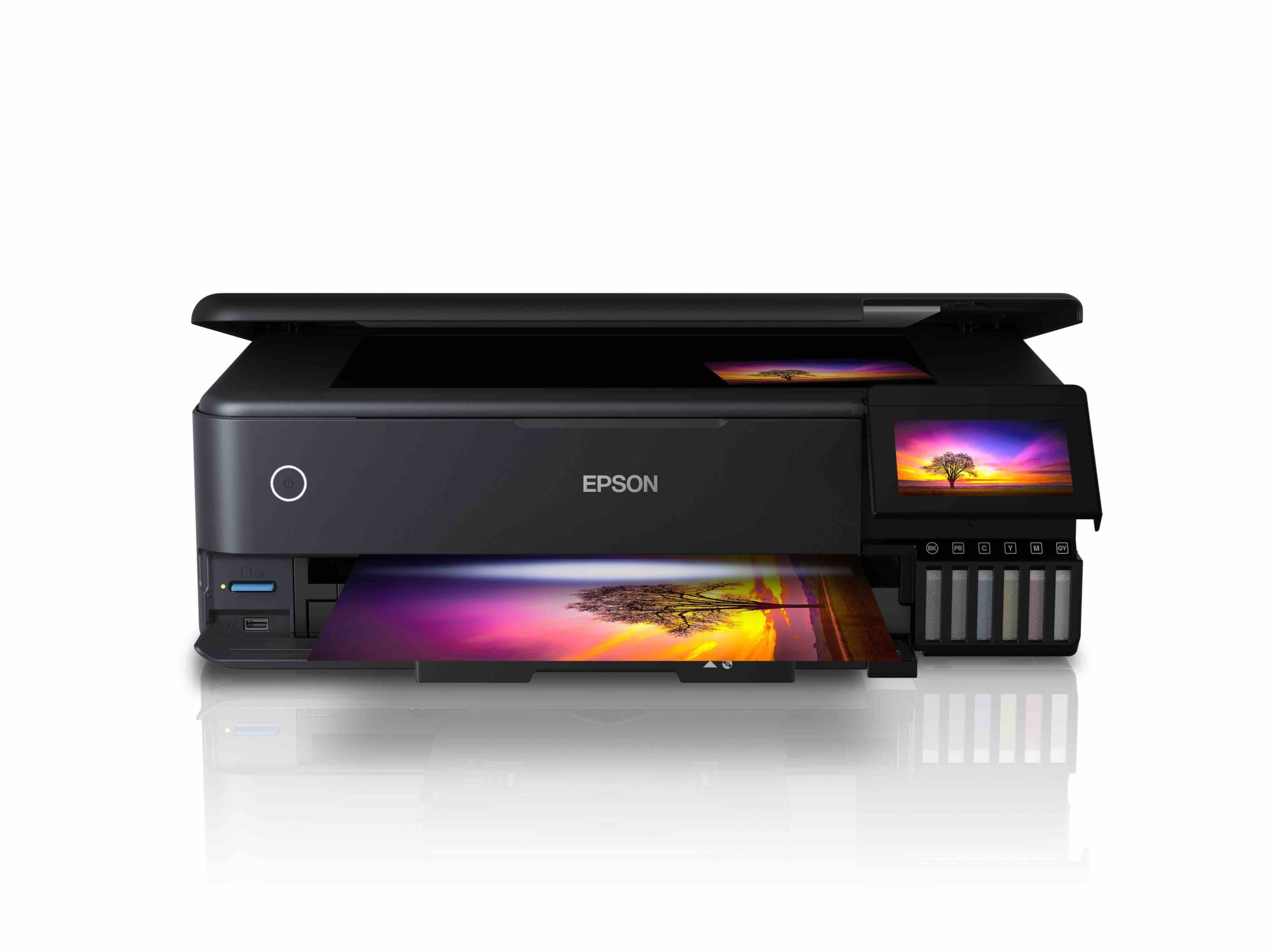
Epson has launched two new heat-free, cartridge-free premium EcoTank Photo models for creative enthusiasts. Perfect for keen amateur photographers, the wireless, multi-function EcoTank Photo ET-8500 and ET-8550 use 6 colour Epson Claria ET Premium inks, can print up to 2,300 high-quality photos or 6,700 pages in black and white or 6,200 pages in colour with one set of ink bottles1 at incredibly low running costs.

As these printers feature Epson’s patented Micro Piezo Heat-Free Technology, you can now enjoy consistent high-speed photo printing, with greatly reduced energy consumption and less need for replacement parts, helping to save time, money and the planet too.

Both new printers come with the new 6 colour Epson Claria ET Premium ink set to produce high-quality, long-lasting, borderless photos of up to A4 size with the ET-8500 and to A3+ with the ET-8550. The photo black and new photo grey ink make it easy to achieve detailed, high-contrast black and white photos with beautiful toning. The pigment black ink ensures sharp text when printing double-sided documents on plain paper. This makes these printers a fantastic choice for every task in your home.

Epson Australia MD, Craig Heckenberg, said, “These printers are great news for photographers, creative enthusiasts and the environment. They are our first heat-free, multi-function, EcoTank Photo printers to feature 6 colour Claria ET Premium Ink for delivering high-quality photos, arts and crafts on a wide range of media. The low running costs and flexible convenience of cartridge-free printing make it ideal for everyday document printing the whole family can enjoy. The fact that they are heat-free means they use far less power than laser printers and are far better for the planet as a result.”

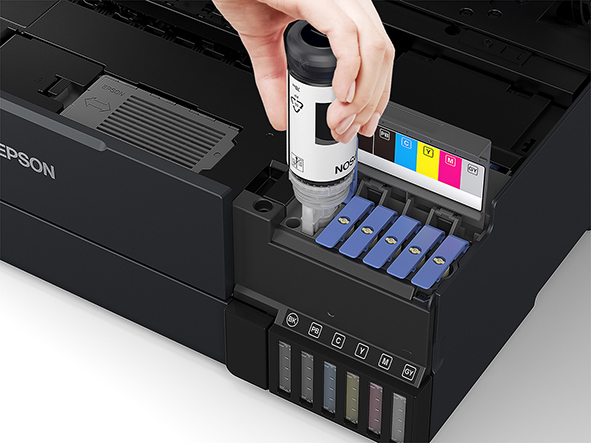
Filling the EcoTank Photo ET-8550’s ink tanks

Amateur photographers and creative hobbyists will appreciate the highly flexible media handling capabilities of the two new printers. With five paper feeds, there is no end to the creative projects these printers can deliver. You can print directly onto suitable CDs and DVDs. You can also store photo size and A4 paper in the two front trays, ensuring your printer is always loaded and ready to go. The rear tray allows you to print on media such as craft papers and card, even up to A3+ size with the ET-8550. Finally, the rear straight pass paper feed means you can print on cardstock and other speciality media up to 1.3 mm thick.


These new premium EcoTank Photo printers join Epson’s award-winning lineup of cartridge-free refillable ink tank printers, which saw global sales reach 50 million units. They deliver ultra-low-cost per page thanks to the EcoTank’s innovative cartridge-free filling system with easy-to-use, mess-free bottles.

The ET-8500 and ET-8550 allow you to print thousands of high-quality photos and documents with one set of included ink bottles1 – equivalent to about 185 individual cartridges2 – and these prints can last up to 300 years when stored in an album³.

EcoTank Photo ET-8550

The ET-8500 and ET-8550 also enable printing from SD cards, and USB flash drives through the large 4.3″ colour touchscreen. With full Wi-Fi, Wi-Fi Direct, and Ethernet connectivity, integrating either of these printers with your existing home set-up is simple and straightforward.


The EcoTank ET-8500 and ET-8550 are available immediately from www.epson.com.au with an RRP of $999.00 and $1149.00, respectively.

For more on EcoTank printers, go to: https://www.epson.com.au/v2/ecotank/

For more on Epson’s Heat-Free Technology, go to: https://www.epson.com.au/heat-free-technology/

For more information on buying a printer see small Business Answers guide.