About Angus Jones

Angus started his first small business in 1989 and has since gone on to have a successful career in marketing. He realised although there were many websites for small business none was addressing the question of how to. Angus has a passion to articulate benefits that add value to customers/readers.

Technologies improve employee experiences

The shift towards a digital workplace presents both opportunities and challenges for modern businesses. As companies increasingly adopt cutting-edge technologies to enhance efficiency and scalability, they must effectively balance these advancements with the human element to maintain an engaging and productive work environment. The challenge for many businesses is in integrating technology in a way that supports, rather than supplants, the human workers. This approach is key to enhancing employee experiences while sustaining long-term business growth and success in a digitally dominated era, according to Logicalis Australia.  

Scott Brown, head of employee experience, Logicalis Australia, said, “Artificial intelligence (AI) and other advanced technologies are shiny new toys that have the capacity to revolutionise how we do business in the modern age. However, it’s critical to understand that human workers will remain essential to business success in many ways. Business leaders can’t afford to let the employee experience fall by the wayside as they embrace new technologies. Instead, they must find a way for the two elements, technology and human, to work in tandem.

“Leaders should focus on strategies that foster employee engagement and well-being in a digitally-driven environment. Implementing user-friendly technology that simplifies workflows and enhances collaboration is key. Equally important is creating digital spaces that support social interaction and personal connection, preserving the essence of a traditional office environment. This can be achieved through virtual team-building activities and digital platforms that encourage open communication and inclusivity.”

Incorporating technology in the workplace significantly enhances connectivity among workers. It facilitates seamless communication and collaboration, regardless of physical locations. Technologies like private 5G and cloud-based solutions provide robust and flexible platforms for employees to interact, share ideas, and work on projects collectively. This level of connectivity both improves efficiency and fosters a sense of unity and teamwork, crucial in today’s often dispersed work environments.  

Technology-driven connectivity facilitates more dynamic and inclusive meetings and brainstorming sessions, bridging gaps that physical distances might create in a remote or hybrid working environment. Advanced video conferencing and collaborative online tools ensure real-time sharing and editing of documents, making teamwork more interactive and productive. Supporting technologies can also be tailored to suit different workstyles and preferences, ensuring all team members, regardless of location, have equal opportunities to contribute and engage. This works to enhance productivity and strengthen the bonds between employees, fostering a more cohesive and supportive workplace culture.

Ultimately, the goal is to create a digital workplace that is efficient and scalable while also being nurturing and human-centric. This approach will lead to enhanced employee satisfaction, productivity, and overall business success. Effective digital workplace management also involves personalised experiences for employees achieved by leveraging data analytics to understand individual work patterns and preferences. This is especially valuable as tailoring digital experiences to meet these unique needs promotes a sense of belonging and increases engagement.

Scott Brown said, “By leveraging these technological advancements, businesses can create a more connected, engaged, and productive workforce. With additional tools like AI-driven analytics, teams can gain insights into work patterns, improving decision making and project management. The integration of smart technology leads to a more adaptable, innovative, and responsive workforce, that aligns with the evolving needs of the business landscape.”

A human-centric digital workplace is not only about the tools and technologies employed; it is also about how these elements are integrated with a deep understanding of human dynamics to improve employee experiences. This approach is essential for fostering a thriving, engaged, and satisfied workforce.

Changes to negative gearing would worsen housing crisis

Responding to reports around proposals to change negative gearing, Master Builders Australia says this is a timely reminder as to why proposed changes to negative gearing have been dropped in the past.

“Prior to the 2019 election Master Builders had modelled ALP policies to change negative gearing and capital gains tax arrangements,” said Master Builders Australia CEO Denita Wawn.

“The policies would have seen a fall in the number of homes being built, thousands of job losses and billions of dollars wiped off the value of residential building activity.

“Fast forward to 2024 and we’re now in an even worse economic and housing environment with renters and mortgage holders bearing the brunt of rapid interest rate rises and high inflation.

“Across the whole housing spectrum, the common constraint is supply. In order to put downward pressure on housing inflation and high rents, we need to build more homes.

“The Henry Tax Review, Productivity Commission and Reserve Bank of Australia have all said curtailing investor incentives like negative gearing and capital gains tax discounts reduces housing supply rather than improve it.

“With the current downturn in new building approvals and investments in new housing, why we would take a sledgehammer to investors including Mums and Dads beggars’ belief.

“The priority of the Federal Government should be on ensuring the objectives of the Housing Accord are fulfilled and our target of building 1.2 million homes is achieved.

“This means doubling down on reducing the cost and time it takes to build, increasing the building and construction workforce, and investing in critical infrastructure to make land “build ready”,” Ms Wawn said.

Top travel hacks to save business

Booking more than two weeks ahead, asking for last room availability, and choosing fares that offer like-for-like credit options with cancellations. These are just some of the top travel hacks that helped the savviest businesses shave hundreds of thousands of dollars off their travel spend last year, as revealed by Corporate Traveller.

Flight Centre Travel Group’s flagship SME travel management business has lifted the lid on the best travel tactics that have helped some of their most strategic business customers save more than 30 per cent on corporate travel over 2023. And with a recent survey revealing that 91 per cent of SMEs would continue to travel regardless of economic pressures this year[1], Tom Walley, Corporate Traveller’s Australian-based Global Managing Director, says these tips could put thousands back in the company coffers.

Tom says: “Simple but effective hacks such as booking airfares a month out from the travel date can alone save a company up to $200 on a single one-way domestic ticket. And given there was a 28.7 per cent increase in ‘revenue passenger kilometres’ to 67.6 billion last year within Australia[2], we know Aussies are spending more and more on travel.”

Corporate Traveller reveals the top travel hacks to save from its savviest customers:

1. Ditch the myth of last-minute travel deals and ensure you book those flights more than two weeks out from the travel date.

Last-minute travel deals are a myth, says Tom, with the cheapest airfares now typically available at least two weeks out from the travel date, but booking as soon as six months in advance would see the largest savings. He further adds that organisation is key when it comes to nabbing the cheapest deals.

Tom says: “Last year one of our clients gave themselves the goal of improving their annual advance purchase by 20 per cent, by simply shifting 33 per cent of their bookings from within two weeks to at least four weeks in advance. By doing so, they reduced their average trip cost year on year by $137 per booking, for a total savings of $120,000 over 800 bookings.”

Airlines offer their cheapest rates on any given flight more than 14 days out, as their algorithms work to seat availability, and as seats get snapped up, the price of the remaining spots tend to increase. Additionally, says Tom, Corporate Travellers’ savviest clients frequently book on the quarter or half hour to nab cheaper fares, with companies that opt for a flexible departure time able to secure the best deals.

Tom says: “Remember that many travel hacks that worked years ago have also changed. Travellers used to think travelling on a Tuesday, for example, would guarantee the best fare. But now, by tracking flight prices, booking in advance and being flexible with meeting times at the destination, you’re far more likely to reap savings.

“But, as is the nature of business travel, advance organisation of meetings and events is not always as easy as it may sound. Travel Management Companies exist to help corporate travellers secure the best deal for those unavoidable last minute travel scenarios.

2. Maximise travel value adds by signing up for a travel programs 

Alongside utilising a travel management partner such as Corporate Traveller to help you secure the most competitive rates, Tom says many of their business customers also enjoy increased value in their travel through travel programs. Corporate Traveller’s SmartStay program, for instance, offers exclusive hotel deals, with add-ons including free breakfast, late checkout, and upgrades.

Tom says: “Travel management companies are typically able to secure better deals because of their buying power and their strong relationships with suppliers. By signing up to hotel or airline newsletters, our clients have also nabbed special coupons and offers.

3. Book a flight that offers the best terms and conditions for changes, credits or cancellations

Not all airline Terms and conditions were created equal, Tom says, and by purchasing a flight that lets you get a full credit that can be used on the same economy flight type has the potential to save you thousands in the long run when those corporate travel plans change. Smart travellers and bookers should always check the terms and conditions of a fare, as some economy tickets may appear to allow flight credits in the case of cancellation, but it may come with restrictions.

Tom says: “Some flight credits only allow you to purchase a flex fare, which means in some cases you’ll end up paying hundreds of dollars more. Others hit you with hefty fees for changing flight dates.

“Our smartest customers opt for flights with good credit and refund policies.”

4. Encourage a carry-on luggage culture

During domestic travel, encouraging staff to fly with just carry-on luggage for short trips can save a company significantly over the course of a year. Some of the more budget-conscious businesses are educating their travellers about what they can pack and how to do it efficiently, leading to savings of up to $90 per airfare.

By taking travel-sized toiletries, separating electronic devices and carrying your laptop separately, Tom says the carry-on luggage limits have proven to be ample on two-to-four-day trips.

5. Always ask for last room availability

Hotel rates vary wildly based on the time of year and city events, says Tom, but by utilising ‘last room availability’, Corporate Traveller’s budget-conscious customers get a guaranteed set contracted rate at the hotel they partner with. Last room availability is a contract between a company and a hotel that ensures a hotel sells their rooms to the company at a contracted price, regardless of how many rooms are left or whether a rare event, such as a concert, has inflated prices.

6. Package your flight, hotel and airport pick-up and drop-off service

Some business travellers make the mistake of booking each component of their travel separately in the hopes of snagging a better deal, but by bundling the trip, their customers usually pay the same, Tom says. This means less time spent organising a car rental or a rideshare, less hassle, and less room for error – after all, for busy business travellers, time is money.

Tom says: “Our top customers know that time is also money and that with bundled deals that include airport transport, the booking and travel process is seamless.”

7. Select hotels that are in close proximity to the CBD, transport and meetings

Businesses that booked hotels in walking distance to major amenities and meeting locations also clocked major savings last year by cutting down on rideshares and even restaurant expenses. By booking a hotel in the city centre, Tom says corporate travellers enjoyed more dining options and less need for a rental car or taxi.

Tom says: “With Australians projected to spend a record $1.77 billion USD on ride-hailing apps this year[3], our savviest customers are realising a well-located hotel can reap major annual savings.”

Aquila Pro AI AX3000 review

We rely so heavily on Wi-Fi today that we expect to have it and that it works where we need it. Indeed, the most common internet issue is not the NBN connection but rather issues caused by your Wi-Fi router. Most people feel very comfortable with their PC, but if I asked you to adjust the settings on your router, I am sure to get a confused look. Let’s face it: we just want Wi-Fi to work. We review the D-Link AQUILA PRO AI AX3000 to see if it fits the bill.

Why do I need a Wi-Fi router?

Your NBN retailer provides an internet feed into your house as a single ethernet port. To create a Wi-FI network, you need a Wi-Fi router. A Wi-Fi router that your NBN retailer may have provided you takes the internet connection via ethernet and allows many people within your home or business to access the internet via ethernet or Wi-Fi connection.

Ethernet cable

The router part of the equation is like a big power board that splits the internet for more than one user but with intelligence, so each additional connection is a measured and controllable addition.

Also, see our previous article on how to improve your Wi-Fi.
Most routers NBN retailers provide low-end models that are unlikely to provide good coverage in larger homes.

How can I get more out of my Wi-Fi router?

The good news is most Wi-Fi routers are almost plug-and-play out of the box. You will need to confirm the Router SSID name (Wi-Fi network name) and password, as well as the router admin password. You can leave these as default, or a handy hint is if you are upgrading from an older router, use the original SSID and password. This means all your connected devices will continue working without reconnecting to your new Wi-fI router.

Beyond the initial setup, if you are technically inclined, you could adjust settings to get better results from your router. These include:

  • Changing the channel used. In high-density housing, many routers might end up using the same channels. Changing to a less-used channel will improve performance. The AX3000 will automatically do this for you.
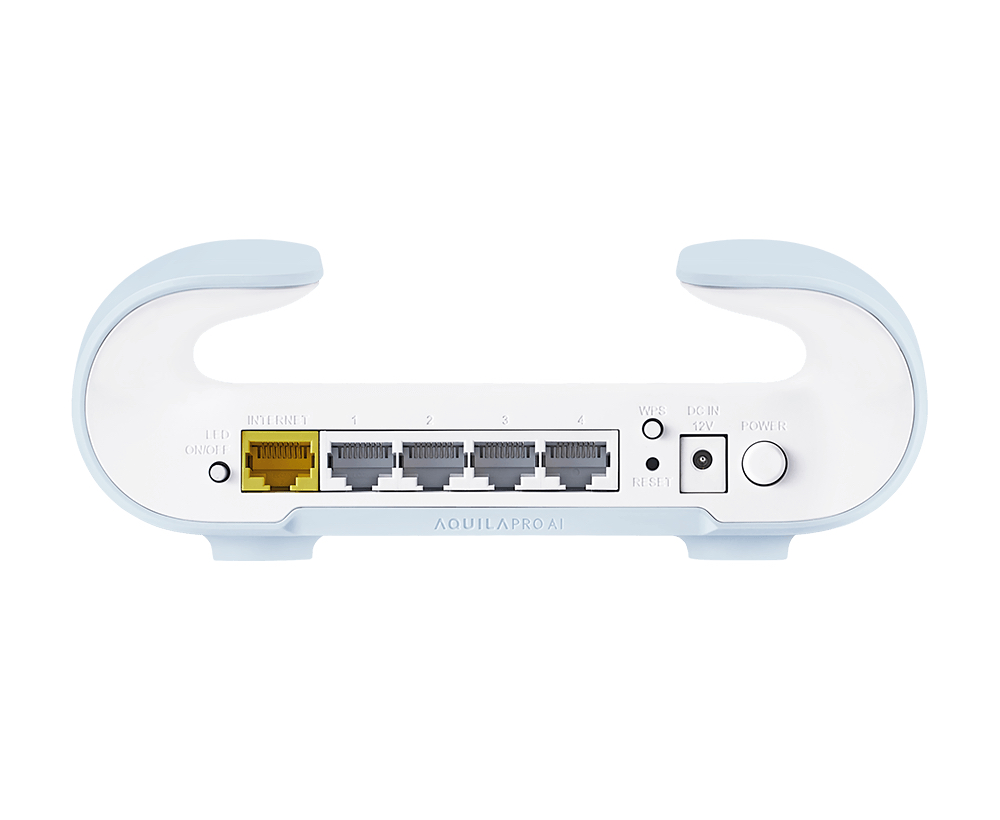
  • Smart TVs and game controllers will work better if you connect them directly to the router with an ethernet cable rather than Wi-Fi. The AX3000 has 4 available ethernet ports.
  • Parental controls enable parents (administrator) to restrict usage of a device access device. On the AX3000, this can be a time of day when the internet is unavailable or blocking access to certain websites. A manual button allows the internet to be switched off for a device.
  • Quality of Service or client priority allows devices to be given priority over other devices. You could prioritise the main TV or someone’s laptop to ensure the best Zoom calls.
  • Guest Wi-Fi allows you to set up a unique Wi-Fi network for guests to use, ensuring they do not have access to shared resources such as shared drives and printers on your primary network.

What are the D-Link AQUILA PRO AI AX3000 features?

The D-Link Aquila Pro AI AX3000 is a Wi-Fi 6 router that promises to blanket your home with fast, reliable internet. Here’s what makes it stand out:

Super Speeds: Say goodbye to lag and buffering! This router boasts speeds up to 3Gbps, thanks to its Wi-Fi 6 technology and extra antenna on the 5GHz band. Stream, game, and video chat without a hitch, even with connected devices.

No Wi-Fi Dead Zones: Tired of weak signals in certain rooms? The Aquila AX3000 has you covered. Its clever antenna design and AI tech deliver strong, consistent Wi-Fi throughout your home, no matter where you are.

Smart Network, Smarter Life: This router isn’t just fast; it’s also brainy. AI helps optimise your network, automatically choosing the best channel to avoid interference and prioritising your bandwidth for the activities you need most, like that important video call.

Future-proof Technology: Wi-Fi 6 is the latest and greatest Wi-Fi standard, so you can rest assured your router won’t be outdated anytime soon. It’s also backwards compatible with older devices, so you don’t have to worry about upgrading everything else.

Mesh Wi-Fi: Want even wider coverage? Add more Aquila AX3000 units to create a mesh Wi-Fi system that seamlessly blankets your entire home.

Security Matters: Keep your network safe with advanced security features like parental controls and WPA3 encryption.

Eco-Friendly Choice: Feel good about purchasing a router made from recycled materials and sustainable packaging.

Using the AQUILA Pro M30-2PK

The first thing you notice when you open the box is the unique shape of the router. The device looks more like an ornament than an electronic device, which is ideal, especially when you don’t want to hide these away to ensure the best coverage.

We tested the M30-2PK, which is a 2-pack Mesh router. Traditionally, you have a router and a satellite with a Mesh router system. In the case of the D-Link, both units can be either, which removes any confusion as to which device needs to be connected to the NBN modem.

To explain a Mesh router: Imagine your Wi-Fi signal as a flashlight beam. Like a standard flashlight, a traditional router shines brightly in one direction, but the corners of the room stay dark. That happens when your Wi-Fi signal struggles to reach certain areas of your home, like that room furthest from the router.

A mesh router system is like having multiple flashlights strategically placed around the room. Each unit (called a node) works together to create a blanket of Wi-Fi, eliminating those dark corners and ensuring a strong, consistent signal everywhere you go, all using the same SSID.

At the start of this review, we talked about wanting a router that worked well out of the box. To extend that, we also want an affordable router, and at $400, the Aquila 2-pack mesh system is affordable to ensure that the NBN speed you pay for gets all around your house. I have a 2 story house, and the 2 pack adequately covered our Wi-Fi needs. D-Link quotes the 2-pack covering 465 square metres and the 3-pack ($550) covering up to 650 metres.

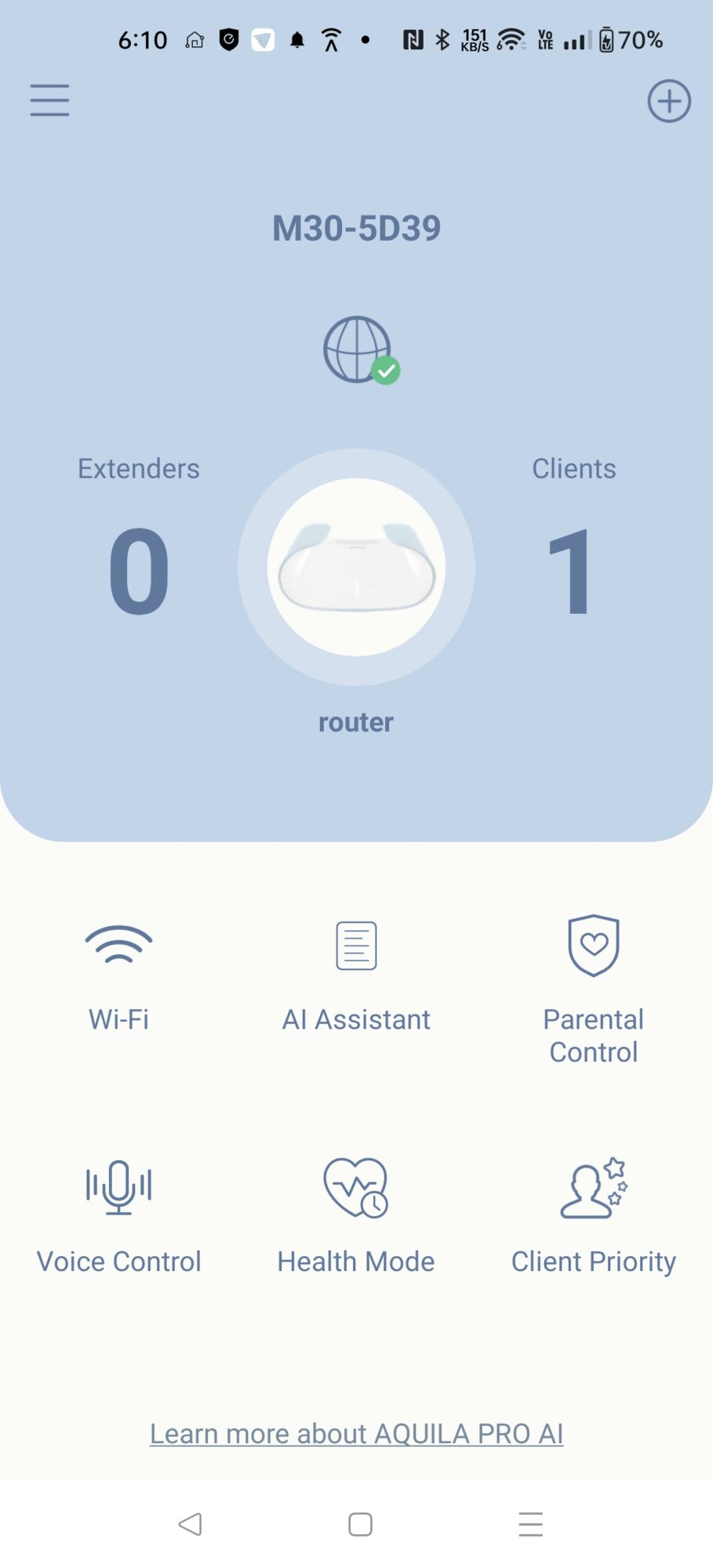
Setting up the Aquila was simple, using the downloadable App and your smartphone. Once you open the App, you are offered a user-friendly menu of options. D-Link has been clever in using AI in the background to modify settings automatically to optimise performance, so you don’t have to worry about the more technical settings.

What you can access allows you to switch on a Guest network, Client Priority and Parental control.

We especially liked the parental control settings as they were easy to follow and included. Many other vendors have very complicated settings or charge you extra for parental control.

A feature we did not think we would use but is there is Voice control. This allows your router to be paired with Google Home or Amazon Alexa smart homes so you can talk to your router. E.g. “turn off guest network”

We did a range test and found that the Aquila was within a metre or two of a Mesh Router package from another vendor that cost more than 3 times the price. As for speed, the capabilities exceed any NBN speed that can be subscribed to, so your internet plan is more likely to be your limiting factor.

Who is a D-Link Aquila PRO AI AX3000 for?

Overall, the D-Link Aquila AX3000 is a powerful Wi-Fi 6 router perfect for homes and small businesses with multiple devices that need speed and reliable coverage. Its smart features and eco-conscious design make it an even more attractive option. It looks good, works well and is simple to operate, but let’s face it, once you set it up, you may not touch it again for years, and this router meets the bill.

QuickBooks Online Advanced

Intuit QuickBooks, global financial technology platform​ in Australia, has announced a new cloud-based offering and the most robust version of QuickBooks Online, built for small to medium sized businesses. Using artificial intelligence, this new solution will serve up insights and patterns that help growing companies better run their business. 

“QuickBooks Online Advanced provides an advantage for growing and more complex businesses at an attractive price point, filling a gap not yet met in the market,” says Damien Greathead, Accounting and Advisor Group Lead at Intuit QuickBooks Australia. 

“We’ve expanded our platform capabilities to serve customers who are self-employed all the way through to those with larger workforces and a high volume of transactions. As these businesses grow, many are faced with the lack of an affordable solution and often adopt software that is both expensive and too complex for their needs. QuickBooks Online Advanced addresses that void to help power their prosperity.”

QuickBooks Online Advanced boasts all the features of Intuit’s most popular small business software solution, QuickBooks Online Plus, as well as enhanced services to make it the perfect fit for growing business owners.

QuickBooks Online Advanced key features include:

  • Automated workflows: Invoices can be sent through pre-set approval flows before they’re sent. Reminders and approvals can be set for transactions like invoices, payments, or deposits, dependent on individual requirements. 
  • Custom roles and permissions: Access to sensitive information can be restricted and information to transactions such as deposits, sales, expenses, inventory or reports can be customised. 
  • Automatic backup and restore: Data is frequently backed up and stored securely, allowing the user to easily restore books to a previous point in time, providing peace of mind.

Additional product capabilities will be added to the platform in the near future — giving users even more great benefits to anticipate including features to increase administrative efficiencies, enhance reporting and benchmarking, and ease expense management.  

1/3 experienced security breaches in 2023

A recent survey by leading software research site Capterra reveals that Australian businesses are more actively improving their cybersecurity infrastructure to defend against potential attacks. The study’s findings show that a third (33%) of the respondents have experienced security breaches in 2023 amidst recent notable data breaches occurring at Optus and Medibank. 

Research Analyst at Capterra, Laura Burgess, said, “The survey presents us an overall picture of cybersecurity’s increasing trend in Australia. The increase of investment in AI-driven solutions should come together with a growing consciousness to alleviate weak password practices.”

“As cybersecurity threats continue, businesses are encouraged to adopt a multi-faceted approach. A combination of IT security investment, workforce education and strong security policies would help ensure an improved defence against these risks,” Laura Burgess adds. 

Cybersecurity Concerns

The biggest concern points towards advanced email phishing attacks, with 51% alarmed by the vulnerability of companies and their employees to this threat. Organisations are encouraged to prioritise awareness and defences against email phishing, which proves to be a challenge to mitigate. Other security concerns include advanced ransomware attacks (37%), AI-enhanced attacks (36%), business email compromise (28%), and software supply chain attacks (23%). 

In response to the progression of these threats, more than half (58%) of Australian businesses reported an increase in IT security spending in 2023 compared to 2022. Proper budget and cybersecurity software implementation is critical to protecting sensitive information and minimising operational disruptions.

AI-Driven Solutions

Adopting AI technologies as a cybersecurity solution shows an ongoing development, with 65% of companies allocating part of their IT budget to AI-driven cybersecurity measures. With AI making its mark in the latest technologies, this shift indicates how companies recognise its potential to safeguard information.

Major factors influencing companies’ drive to invest more in AI-driven solutions include phishing and social engineering attacks. Almost half (42%) of respondents indicated these specific threats as the main reasons in their decision-making process to improve their cybersecurity infrastructure. 

AI-driven solutions can analyse a significant amount of data, which enables immediate detection of unusual patterns that may lead to a security threat. Speed is crucial in identifying threats to allow IT security teams to receive alerts and act in real-time to minimise impact.

Weak Password Practices

While we see an increasing trend in cybersecurity technology adoption, potential exposure to threats is presented by weak password practices. It remains a persisting challenge as almost half (45%) of respondents use the same password for multiple software or accounts. The risk of exposure is heightened for employees working remotely, as their personal network may have a different level of security compared to the corporate domain. Awareness through cybersecurity training is emphasised to comprehensively address this risk, with only 36% stating they raised security concerns with their IT department.

Capterra’s ‘2024 Data Security Survey’ was conducted online in November 2023 among over 700 respondents from Australia, Canada, France, Germany, India and the U.K. The report revealed that 568 are explicitly involved in their company’s cybersecurity measures, with the majority indicating they’ve increased investment in IT security.

Inflation is declining

Inflation is declining in Australia. Recent figures from the Australian Bureau of Statistics (ABS) show that the Consumer Price Index (CPI) recorded a modest 0.6 per cent increase during the December 2023 quarter, marking the slowest growth since March 2021. Over the past year, CPI rose by 4.1 per cent, indicating a significant slowdown in the inflation rate during the final months of last year, which was halved compared to earlier periods. 

According to Dr Gonzalo Castex, an economist and Senior Lecturer at UNSW Business School, various factors such as clothing, footwear, holiday travel and furnishings, have contributed to the decline in the CPI. Conversely, he says insurance, financial services, gas, electricity, rent, tobacco, bread and cereal products “have played a role in the opposite direction.” 

The ABS says rental and electricity prices remain as significant contributors to overall rising costs, with a 7.1 per cent increase in rental prices and a 10.7 per cent surge in electricity prices in the 12 months to November. 

“The current cash rate of 4.35 per cent appears to be contracting aggregate demand, opening the possibility for the Reserve Bank of Australia (RBA) to reduce its rate in upcoming meetings. This could alleviate pressure on households affected by a significant rent increase and mortgage payments,” says Dr Castex. 

Although inflation is declining, Dr Castex and Professor Gigi Foster, School of Economics at UNSW Business School, say this figure is still high. Why is inflation declining, and what does this mean for Australians and market economics more generally? 

Why is inflation declining?  

Dr Castex: The RBA has implemented a contractionary monetary policy since May 2022. The impact of increasing the cash rate takes some time to influence prices as a consequence of a contraction of the aggregate demand. Consequently, we have observed an overall decrease in prices since January 2023. It’s worth noting that while the current inflation rate has decreased, it still remains over the target. The RBA should continue monitoring the evolution of prices, aiming to keep the inflation rate within the target range of 2 to 3 per cent per year. 

Prof. Foster: Some items in the basket the ABS uses to construct the consumer price index have risen less than in prior data releases. However, some items have kept up the pace. So, depending on what a consumer buys, the “easing inflation” report may or may not match their pocketbook’s experience. 

What will happen if inflation continues to decline? 

Dr Castex: If inflation continues its downward trajectory, the RBA will likely respond by lowering the cash rate. However, new geopolitical developments in the Middle East could potentially impact prices, adding an element of uncertainty to this scenario.  There are also other economic indicators to take into consideration, like the unemployment rate, for example. 

The cash rate is a crucial tool in the RBA’s monetary policy toolkit, influencing economic borrowing costs. The RBA aims to stimulate economic activity by reducing the cash rate and making borrowing more affordable. 

Prof. Foster: Some analysts are predicting fewer rate hikes in the near future. However, we are still far from reaching RBA’s target cash rate range of 2-3 per cent. There are also signs that the labour market is still very tight – that’s one of the indicators the RBA uses to determine whether it can keep pushing rates up without knocking the economy into a visible downturn. I expect we will see more rate hikes this year. 

How will this influence the housing market in Australia? 

Dr Castex: In the context of the housing market, a lower cash rate often leads to decreased mortgage interest rates – which may attract more home buyers and potentially exert upward pressure on home prices. 

However, it’s important to acknowledge that the relationship between interest rates, inflation, and the housing market is multifaceted. While a lower cash rate may contribute to increased housing demand, other factors such as economic conditions, employment levels, and global events also shape market dynamics. The RBA carefully considers these variables in its decision-making process, aiming to strike a balance that supports overall economic stability. 

Prof. Foster: The steady rise in the price of housing is one of the factors pushing inflation higher in recent years. With the government now bringing in vast numbers of immigrants – especially immigrant students, there is more pressure on the housing component of renting consumers’ baskets than during the COVID era. For people with a mortgage, rising interest rates continue to impact Australians considerably. 

While inflation is declining, is it considered low? And what is considered low? 

Dr Castex: Not yet, the inflation rate has been on a declining trend, but it’s important to note that the current level is still relatively high compared to the RBA’s target range. As of the latest release, the inflation rate is 3.4 per cent. This figure exceeds the RBA’s target range of 2-3 per cent, indicating that inflation remains elevated. 

In assessing whether inflation is considered low, it’s crucial to consider the historical context of the past ten years. While the recent decline is notable, the absolute level of 4.1 per cent is still considerably higher than the upper bound of the RBA’s target. Generally, an inflation rate within the 2-3 per cent range is conducive to price stability and economic growth. The RBA monitors these trends closely to ensure that inflation remains within this target band. 

Prof. Foster: Definitely not. The primary reason we are in this inflationary situation is that the Australian government poured cash into the economy after putting it into suspended animation during the COVID era. Supply chains were disrupted, fiscal stimulus was distributed liberally to households and businesses without the economic activity there to soak it up, and the RBA delayed raising rates. Now, we’re feeling the consequences of all those mistakes. 

How will a low inflation rate impact everyday Australians? 

Dr Castex: A high inflation rate reflects an overall price increase and higher economic uncertainty, and we’ve been observing this trend since 2020. When the inflation rate is high, it can impact everyday Australians in several ways. If our income is not adequately adjusted to match the rising cost of living, it may result in a decline in real consumption. In practical terms, individuals and households may need help to afford the same quantity of goods and services, such as reducing purchasing power for everyday items like apples and bananas. 

Prof. Foster: The RBA has a target 2-3 per cent inflation rate for a reason: it’s the level at which the economy hums along without people having to think too hard about rising prices and what they mean for contracts, weekly budgeting, or anything else, but still while generally feeling upbeat about the economy, and acting accordingly. We need to see a sustained and steady lowering of the inflation rate before the RBA and Australia, more broadly, can adopt a more reassured stance. 

Zeller launches Tap to Pay on Android

Zeller has launched Tap to Pay on Android, making it the first Australian-born fintech to deploy this new and innovative way to accept contactless payments, with an offering that’s vastly simpler and more affordable than similar products from US entrants. Tap to Pay on Android enables businesses to accept contactless payments directly from their smartphone using the Zeller App, with no additional hardware required.

Since deploying Tap to Pay on iPhone in October 2023, Australian business owners have quickly demonstrated their love for the new way to accept contactless payments. Zeller App — the leading finance app which enables businesses to manage their account, cards, financial reporting, and accept contactless payments — is the top-rated business financial services and banking app in Australia*, when ranked against similar apps offered by Tyro and the big-4 banks.

Australian shoppers have also demonstrated unequivocal support for Tap to Pay, with the average transaction value for payments accepted using Tap to Pay with Zeller App being 108% higher in comparison to in-person payments accepted using Zeller EFTPOS Terminal. Australia is widely regarded as one of the world’s leading early adopter markets for new payments innovation, having deployed EMV chip cards and tap-and-go contactless payments ahead of most other major western markets.

Tap to Pay on Android and IOS with Zeller App has quickly proven to be a valuable addition to Zeller’s growing ecosystem, with businesses demonstrating a variety of valuable use cases for the new solution.

  • South Melbourne Seafoods utilised Tap to Pay during the busy Christmas season to accept in-queue payments for order collection, reducing customer wait times.
  • Fusspots Antique Emporium in Inglewood, regional Victoria, uses Tap to Pay as a back-up payments solution when wired internet connectivity is unreliable.
  • Accommodation and dining destination Hotel Sorrento utilises Tap to Pay throughout the Summer to accept payments from guests as they relax poolside.

Sebastian Fernández Mackenzie, owner of Seb’s Mobile Car Wash in Melbourne, was one of the first Australian businesses to try Tap to Pay with Zeller App. It was a convenient solution to avoid the administrative burden of invoicing, while reducing the need for customers to carry cash.

“Back then I didn’t have my regular clients, I was sending invoices to people I’d just met. I’d have to send reminders, and one person took three days to pay me.” commented Seb. “Now, my clients simply tap their card or mobile wallet to my phone, and the payment is processed instantly. It’s so simple, takes minutes to set up, and I can see every transaction and settlement immediately in my Zeller App.”

“The early adoption we’ve seen for Tap to Pay with Zeller App has been overwhelming. Australian businesses continue to demonstrate their willingness to adopt and try the newest forms of payment innovation, particularly when they can help make getting paid and running their business simpler” said Ben Pfisterer, Zeller CEO and co-founder. “Zeller is proud to become the leading Australian-born fintech deploying Tap to Pay across both iOS and Android. It’s helping get brand new businesses off the ground; supporting those that are mobile, remote or impacted by unreliable connectivity; and giving established businesses another solution to boost their financial success.”

Android smartphone users can now join thousands of Zeller merchants using Tap to Pay by downloading Zeller App, and enabling the feature instantly. For more information and device eligibility, please click here.

EPOS Upgrades Enterprise Headset range

EPOS, pioneers in audio technology, has announced the expansion of its flagship enterprise headset range at Integrated Systems Europe 2024 (ISE) in Barcelona. The new line includes two new state-of-the art wired headset series – the IMPACT 700 and IMPACT 800. Tailored to meet the diverse demands of modern business professionals, the next generation of IMPACT headsets empowers seamless communication in all open office work environments.

Setting a New Standard for Enterprise Headset Audio Solutions

Whether it’s taking a call in an open office environment or holding critical conversations which require deep concentration – EPOS understands that different work environments pose unique challenges when it comes to communication. Using cutting-edge technology and decades of psychoacoustic research, the next IMPACT generation provides a suite of premium solutions to cater to every office environment. With Bluetooth®, Digital Enhanced Cordless Telecommunications (DECT[1]), and Wired options there is a product to suit the needs of every talk-centric professional.

Setting a new standard for enterprise technology, EPOS develops audio solutions built on EPOS BrainAdapt™, a group of technologies that apply world-leading research on how the brain perceives sound to improve cognitive performance. The entire IMPACT Generation line is developed with pioneering EPOS BrainAdapt technology at its core – helping to minimise brain fatigue and empower better performance and improved communication.

A Portfolio for Open Office Environment

The IMPACT 700 and 800 join EPOS’ existing line-up of best-in-class enterprise headset. This includes the flagship on-ear Bluetooth® headset– the IMPACT 1000 – which launched in 2023. This device harnesses powerful AI technologies to ensure that users on all sides of a meeting can stay focused for an impactful dialogue.

The comprehensive product portfolio will now comprise of:

  • The IMPACT 700: Designed with contact centre professionals in mind, the Wired IMPACT 700 series is carefully crafted with a lightweight design and soft memory foam earpads, to deliver unprecedented levels of comfort all day long. And utilising three digital microphones that are built on EPOS BrainAdapt™ technologies the IMPACT 700 provides industry-leading voice pickup to ensure natural-sounding calls. 
  • The IMPACT 800: The next iteration of wired headsets for desk workers in open office environments – the IMPACT 800 ensures users are heard no matter the level of background noise. Combining EPOS BrainAdapt™ technologies with adaptive ANC and industry leading voice-pickup courtesy of EPOS AI™ the IMPACT 800, as well as the IMPACT 1000, can help improve efficiency by 40%[2].
  • The IMPACT 1000: Using industry leading speech intelligibility and powered by EPOS AI™ the IMPACT 1000 is EPOS’ flagship Bluetooth headset series, designed to address the challenges of modern work environments. With its powerful technologies and user-friendly features, it mitigates brain fatigue, reducesdisruptive sounds, and enables users to unlock new levels of productivity and performance.
  • The IMPACT 5000: Raising the wireless DECT headset standard, the IMPACT 5000 allows users to enjoy rich, natural sound as well as total flexibility. Plus, with enhanced security features such as Protected Pairing, 128-bit authentication, DECT Security certification, and EPOS Manager wearers can feel confident knowing their calls are secure.

Johnny Andersen, VP Product & Portfolio Management at EPOS says: “At EPOS, we have an unwavering commitment to empowering workers to communicate effortlessly and efficiently – wherever and whenever. But we also understand that the communication needs of businesses are multifaceted and are always evolving to meet the needs of every office environment. Our product development is built around perfecting audio experiences for users, and with the addition of the IMPACT 700 and 800 series, our IMPACT line now covers all the communication needs of talk-centric business professionals, whatever the context.” 

For more information about the IMPACT 700, click here.

For more information about the IMPACT 800, click here.

Availability and MSRP:

IMPACT 800: January 31, 2024. MSRP: From 199 AUD

IMPACT 700: April 9, 2024. MSRP: From 235 AUD

ATO launches free online learning

The ATO has launched a new online learning platform offering free courses to help small business owners master their tax and super obligations.

The ‘Essentials to strengthen your small business’ website includes more than 20 short courses and a calendar of key lodgment due dates to support small businesses.

Deputy Commissioner Will Day said the new platform is designed for small business owners who want to enhance their knowledge of tax and super.

‘Small business owners can now access short, free and flexible online courses to sharpen their knowledge of tax, super and the core aspects of effective small business management.’

‘The new platform supports a variety of learning styles with videos, case studies, audio content and written information, as well as the option to test your knowledge with quick quizzes – making it easier for all small businesses to learn about important components of running a business.’

‘It also includes tips on areas where we see small business owners make mistakes, like goods and services tax (GST) and business deductions.’

‘We know that a lot of small businesses don’t have time to attend courses during business hours while they are busy running their business – so the beauty of our new platform is that you can do it at a time that suits you, save your progress, and then pick it up again later,’ said Mr Day.

The new platform is also a useful resource for tax practitioners, especially for those that are small businesses themselves, to share and use with their staff and clients.

The website was co-created with small businesses and educational experts to deliver learning pathways that can be customised, depending on each stage of a business’s life cycle, structure and industry.

Minister for Small Business Julie Collins said the Albanese Government is committed to reducing the time small businesses spend doing taxes and resources like this provide valuable practical assistance.

‘I encourage small businesses to take up this great opportunity from the Australian Taxation Office with free courses specifically designed for the needs of small business,’ Minister Collins said.

‘Our latest Budget included new measures to help small business with taxes including longer timeframes to amend tax returns and expanding access to advice through the tax clinic program.’

Australian Small Business and Family Enterprise Ombudsman, Bruce Billson said this resource will be helpful to small businesses.

‘Business know-how and being able to benefit from the wisdom of others can be key to successfully turning an idea into an enterprise,’ Mr Billson said.

‘But the spark that inspires an entrepreneurial person into creating and growing a business is rarely the behind-the-scenes business of running the business. Yet this is where success and better decision-making can be formed.’

‘That’s why these resources are so important and helpful, and I commend them to you.’

The new ‘Essentials to strengthen your small business’ online learning platform is now live.