Every January, many workplace leaders hold their breath and hope Australia Day will pass quietly.
No complaints. No difficult conversations. No tension to manage.
I understand the instinct. January 26 is divisive, emotionally charged, and deeply personal. But for workplaces, avoiding it does not make the tension disappear. It simply drives it underground.
Australia is a divided nation when it comes to Australia Day, and workplaces inherit that division whether they like it or not. Employees don’t leave their identities, values, or emotions at the door. They bring them into meetings, team chats, and leadership decisions.
For Aboriginal and Torres Strait Islander peoples, January 26 marks the beginning of invasion, dispossession, and intergenerational trauma. That truth alone makes it a difficult day for many workplaces. But it does not stop there.
Increasingly, this is not only a First Nations issue.
Employees from migrant and refugee backgrounds, particularly those from countries shaped by colonisation, conflict, or displacement, often experience Australia Day with ambivalence. Some feel proud to celebrate their citizenship, while simultaneously feeling uneasy about what the date represents.
At the same time, many non-Indigenous allies are also finding this period increasingly uncomfortable. Not because they lack care or goodwill, but because the conversation has become so polarised that people fear saying the wrong thing, being labelled, or causing harm. What was once curiosity has, in some spaces, turned into hesitation or silence.
What unites these experiences is uncertainty. People don’t want to offend. They don’t want to get it wrong. And when leaders say nothing, employees are left to navigate that complexity alone.
In my work with Evolve Communities and the workplace training programs we run, we hear this repeatedly. People are not asking leaders to take a political position. They are asking for acknowledgement, guidance, and permission to hold mixed feelings.
The biggest risk for business leaders is assuming silence is neutral. It isn’t.
When organisations avoid January 26 altogether, the impact shows up quietly but consistently. Disengagement, exclusion, increased cultural load on First Nations staff, and a hardening of views that goes unaddressed. Trust erodes. Psychological safety weakens. Leaders lose credibility, not because they chose the “wrong” stance, but because they chose no stance at all.
Australia Day has only been marked nationally on January 26 since 1994. It is younger than Kylie Minogue’s Locomotion. Yet many leaders treat it as an immovable tradition, rather than a moment that requires mature leadership in complexity.
This is why January 26 is not a once-a-year communications issue. It is a leadership capability test.
The good news is that navigating this well does not require grand statements or perfect language. It requires practical, human leadership.
What works, and what we see working with our clients, starts with acknowledging complexity. Naming that Australia Day holds different meanings for different people creates immediate psychological safety. It signals that employees don’t have to hide how they feel.
Choice matters. Offering options to work, to take leave, or to mark the day in a way that aligns with personal values respects difference without forcing conformity.
Education matters even more. Not as a one-off session or symbolic gesture, but as part of ongoing cultural capability. Understanding history, listening to lived experience, and building confidence in how to have respectful conversations reduces fear and division over time.
At Evolve, we use a simple framework. Reflect, relate, reconcile. Reflect on the issue and the facts. Relate by stepping into someone else’s perspective. Reconcile by asking how we move forward together. This shifts conversations away from winning arguments and towards maintaining relationships.
Perhaps most importantly, leaders need to recognise that workplaces are cultural actors, not neutral bystanders. The way organisations handle January 26 sends a powerful signal about who belongs, whose experiences matter, and how difference is held.
Australia Day will not become less divisive by ignoring it. But leaders who are willing to step into the discomfort calmly, respectfully, and with curiosity will build stronger, more inclusive organisations because of it.
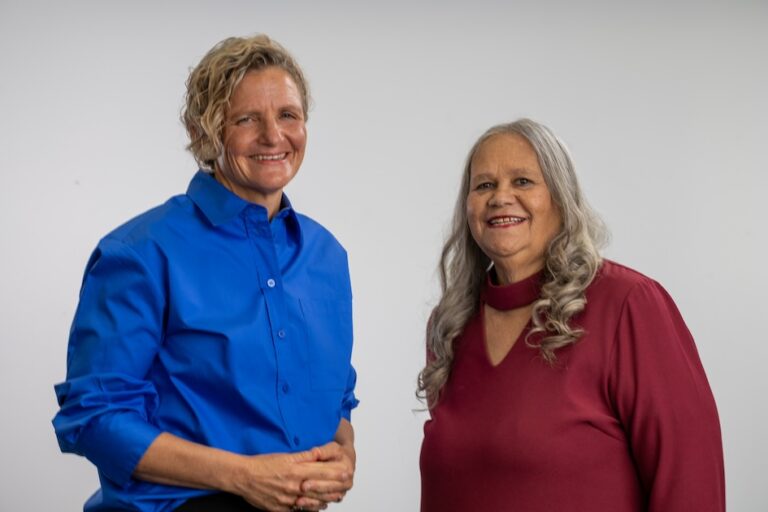
Contributed by Carla Rogers, Founder of Evolve Communities