
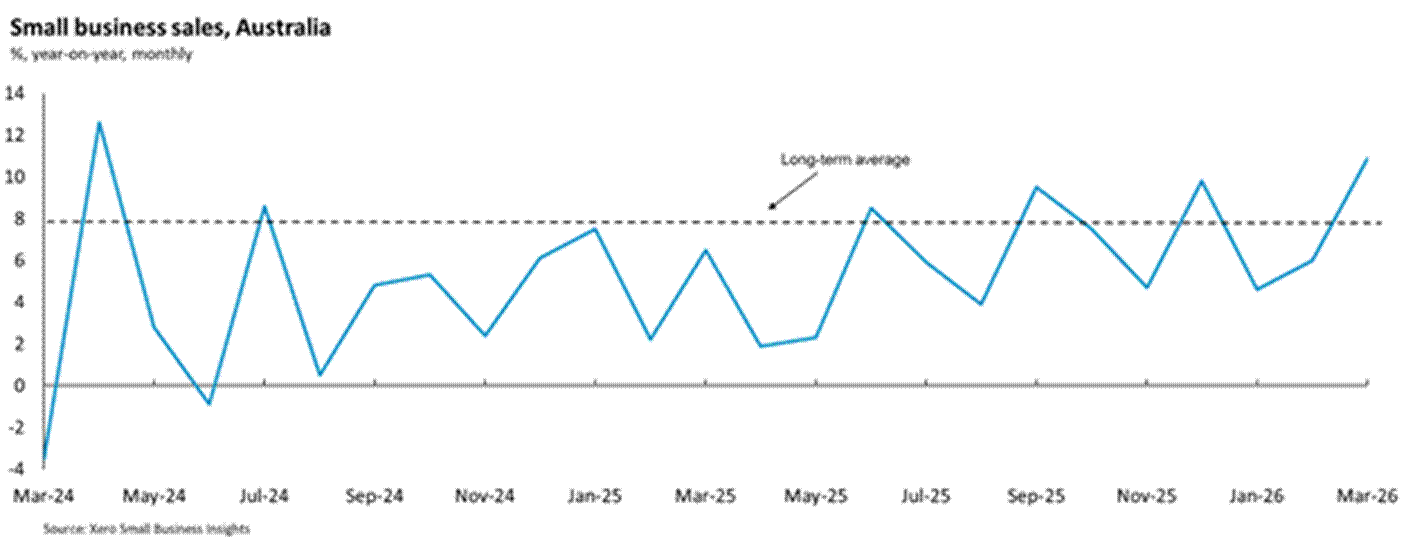
Australian small businesses continued their strong momentum from the end of 2025, with a 7.2% year-on-year increase in sales for the first quarter of 2026 – including a 10.9% y/y spike in March – confirming last quarter’s high was a sustained trend.
The XSBI report, which analyses anonymised and aggregated accounting data from 520,000 Australian small businesses, shows the sector maintained momentum despite back-to-back interest rate hikes and the early weeks of the fuel crisis caused by conflict in the Middle East. Australian small businesses outperformed their peers in the US, the UK, New Zealand, and Canada in Q1.
Australian small businesses March quarter at a glance:
- Sales rose 7.2% y/y, increasing as the month progressed – rising 4.6% y/y in January, 6.0% y/y in February and surging 10.9% y/y in March
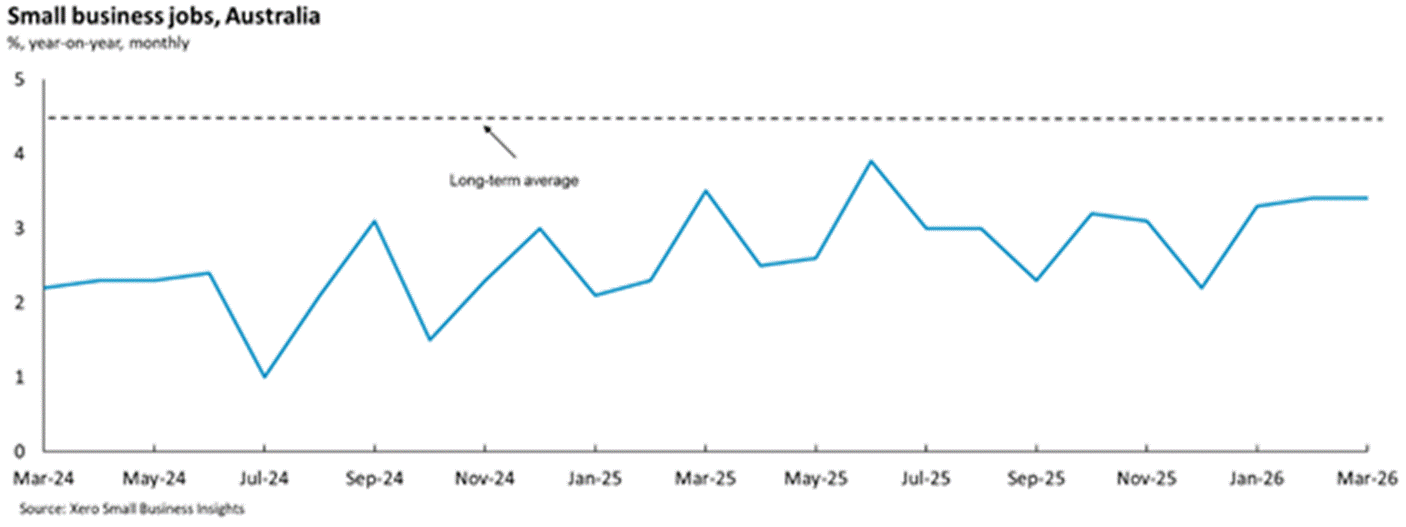
- Jobs grew 3.4% y/y – increasing from 2.8% y/y in the December quarter
- Wage growth also increased to 2.7% y/y – up from 2.5% in the previous quarter and just below the historical average of 2.9%
- Small businesses were paid on average in 24.1 days, holding firm from 24.0 days in the December quarter
- Construction (+10.4% y/y), healthcare (+9.2% y/y), and financial services (8.8% y/y) were the best-performing industries for sales growth
- Queensland (+9.8% y/y) and Western Australia (+8.1% y/y) were the best-performing states in terms of sales, with Queensland continuing to have the highest growth rate in the country.
Louise Southall, Economist at Xero, cautioned that this momentum could be at risk if the RBA raises the cash rate in May or if escalating Middle East tensions further disrupt fuel, transport and global supply chains.
Southall pointed to the transport and logistics industry as a possible early warning sign. Higher fuel prices drove increased sales in the sector up 13.2% year-on-year in March. That was up 8.2 percentage points from February, and the largest month-to-month sales rise across all industries tracked by the report.
Southall said: “We can see that small businesses that provide passenger and freight services have already been impacted by higher fuel prices. We are now watching closely to see if and how this inflationary impact bleeds into small businesses providing other goods and services in the coming months and how higher prices could affect overall business activity.”
Price increases contained to fuel as small business sales grow
Ahead of the Australian Bureau of Statistics’ (ABS) household spending release, XSBI data offers an early proxy for consumer spending, showing that price increases to date are largely in fuel only and not broad-based. This suggests first-quarter sales likely reflected a genuine improvement in sales activity rather than being simply due to higher prices (with the exception of the transport and logistics sector in March).
Wages grow but industries still unable to match inflation
Wages rose 2.7% y/y in the three months to March, which is still behind headline inflation of 3.7%, but edging closer to the historical average of 2.9% and reflecting ongoing tight conditions in hiring. Hospitality workers had the largest pay increase in the past year (+3.5% y/y), although this had little impact attracting new workers to the sector, as it continues to experience a skills shortage. Construction also performed well, with wages up 3.3% y/y. Most other industries were around the national average, with the exception of transport and logistics (+2.1% y/y) and information, media and telecommunications (+2.2% y/y)
Australian companies ramp up hiring to start the year
As sales and wages gathered momentum, so too has jobs growth. Jobs grew 3.4% y/y in the March quarter, after a 2.8% increase in the December quarter. Public administration (+5.6% y/y) led the gains, with construction (+5.3% y/y) continuing to be a strong performer. Hospitality (+0.7% y/y) and administrative services (+1.3% y/y) remained the softest industries for jobs growth. As with sales, the best performing states were Western Australia (4.5% y/y) and Queensland (4.1% y/y), with WA continuing to attract talent following its country-leading economic and population growth in 2025.
Southall said: “Small businesses have started 2026 in good shape, with sales, jobs and wages all growing – key metrics the RBA monitors closely for interest rate decisions. Xero’s data is the first insight into how the conflict in the Middle East is impacting small businesses, and so far it hasn’t been as damaging as many feared, despite Australia being one of the countries most reliant on Middle Eastern oil among the markets we track. Importantly, this strength appears to reflect genuine increases in activity rather than price-driven growth, with cost pressures so far largely confined to fuel.”
Angad Soin, Managing Director ANZ & Global Chief Strategy Officer at Xero, said: “The strong XSBI results are good news for small businesses but challenges are still to come – we expect higher fuel costs to increasingly flow through to the price of goods and services across industries in the coming months. For small businesses, it’s an important time to think about your strategy to navigate the ongoing uncertainty. Work with your advisor, pressure test your cash flow, and make sure you have clear visibility of your costs in real time.”
To find out more about how Xero Small Business Insights is constructed, see the methodology.